When Should You Delete the App? The Nerd's Honest Guide to Going Exclusive

Deleting the app is the modern equivalent of "going steady" — but how do you actually know when it's time? A practical, no-nonsense guide for nerds who overthink everything (you know who you are).
When Should You Delete the App? The Nerd's Honest Guide to Going Exclusive
Somewhere between your fourth and eighth date, you stopped swiping. Not because of a conscious decision — just because opening Hinge started to feel vaguely disloyal. And now the app sits there, untouched, while you quietly wonder: are we doing this? Are we exclusive? And also: is it strange that I'm afraid to delete an app?

It's not strange. It's extremely normal — especially if your brain defaults to running simulations before committing to any action with real-world consequences. "Deleting the app" has become the modern shorthand for going exclusive, but nobody explains the actual ruleset. Does deleting it mean you've already had the talk? Does it obligate the other person? Do you delete the app or the account? And why does a 47-kilobyte icon feel like it has more emotional weight than most conversations you've had this year?
Let's actually work through this. Framework incoming.
Why This Is Particularly Hard for Overthinkers

According to Myers-Briggs data, roughly 47% of the general population leans introverted, and among men that number tends to run somewhat higher. If you are reading a piece titled "the nerd's honest guide to going exclusive," you are probably not in the minority here.
Here's the thing about introverted, analytical thinkers and relationship milestones: they run the post-date debrief. Every conversation gets reviewed. Every pause, every text response time, every emoji or conspicuous lack thereof gets filed into the mental spreadsheet. Which means by the time you're actually considering exclusivity, you've already simulated seventeen scenarios where it goes sideways.
The Analysis Paralysis Spiral
You've been on seven or eight genuinely good dates. You haven't been swiping. They seem into you. But you haven't said anything. And the longer you don't say anything, the more loaded the moment becomes, until "should we stop seeing other people?" feels roughly equivalent to the dramatic declaration scene in a period drama.
The spiral goes: What if I delete and they don't? What if it's too soon and I freak them out? What if we're not on the same page and I just assumed? So you do nothing. The app stays installed, unused, glowing faintly in the drawer of your digital life. Three months in, still no clarity.
The Gamer's Extra Layer
Gamers specifically carry an additional wrinkle here. According to a SolitaireBliss survey of over 1,000 gamers, 28% have felt judged by a significant other for their gaming hobby. When a core part of your identity has quietly cost you in past relationships, entering an exclusive one means being fully seen — and that raises the stakes considerably. It's not just "will they stay?" It's "will they stay once they know how many hours I've logged this month?"
That vulnerability is real and worth naming. But staying in the indefinite "talking stage" because it feels safer isn't protecting you — it's just postponing the thing you actually want.
What the Data Actually Says (And Why It Won't Give You a Clean Answer)
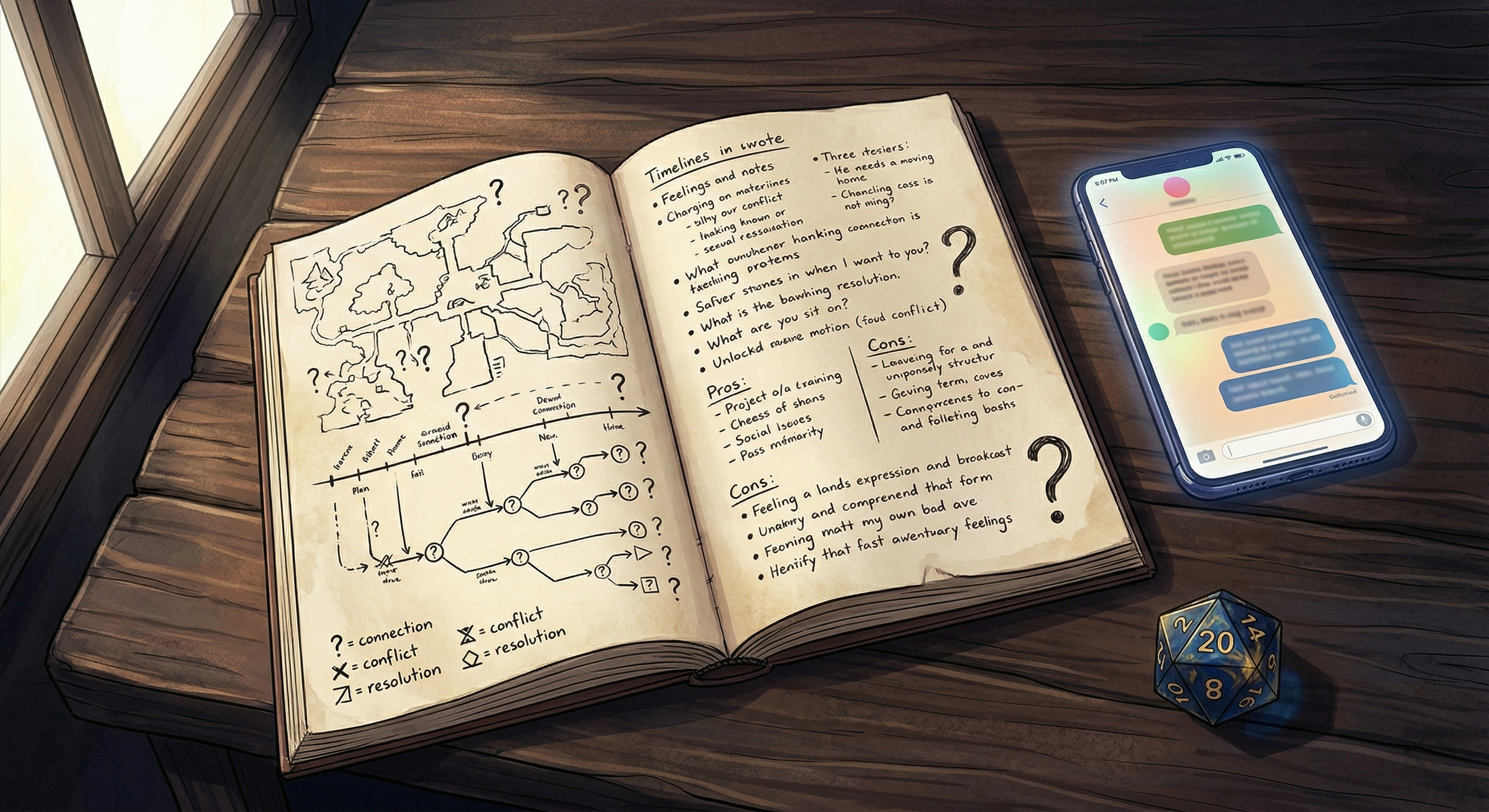
You want a number. I understand. Here's what the research gives us:
A Time Out survey of 11,000 people worldwide found that most couples go exclusive after roughly six dates, which typically falls within the one-to-two month range. A separate Ipsos survey of about 1,000 U.S. adults found that 39% of Americans consider three months the appropriate time to have the exclusivity conversation. Other research places the formal transition from "dating" to "exclusive" somewhere around three to four months in.
So the honest answer is: somewhere between month one and month four. Which is not a useful answer. The range exists because the timeline is the wrong variable.
Time Is a Proxy, Not a Signal
Here's where the analytical brain gets tripped up: it wants a threshold. Six dates. Ninety days. Some objective trigger condition with a confidence interval attached. But exclusivity isn't a level unlock — it's a mutual agreement, and agreements happen when both people feel ready, not when the calendar reaches a target date.
That said, the data does give you a useful pressure check: if you've been dating for four months and the subject hasn't come up at all, something is off. Either someone is actively avoiding it, or the signals are less clear than you've been assuming. Use the timeline as a reality anchor, not a countdown timer.
It's also worth noting that 42% of people who have ever used a dating app report ending up in a committed relationship with someone they met through one, according to SSRS research from 2024. This is not a fluke medium. These relationships are real and they stick. You're not working against the grain here.
The Actual Signals You're Ready

Time-based metrics are unreliable. Behavior is where the real signal lives. Here's what actually matters:
You've Both Stopped Acting Like You're Still Shopping
If neither of you has mentioned anyone else in weeks. If you're booking things in advance — concerts, day trips, events two months out. If they text you with no agenda, just because something reminded them of you. That's not "talking." That's a relationship that hasn't been named yet.
Single gamers are, incidentally, twice as likely to go on dates in a given month compared to non-gamers, according to IGN/Ipsos research. So if you've been actively dating and you've now narrowed your focus to one person without really deciding to — you already know something about where this is headed.
The App Feels Weird to Open
That low-grade guilt when you do scroll through matches? Useful data. It means your instincts already made the decision. Your conscious brain is just waiting to file the paperwork.
Per an AppsFlyer survey, 65% of dating apps get deleted within a month — not always because people found someone, but because the apps are genuinely exhausting. If you're keeping it installed out of some vague sense of "keeping options open" rather than any real intent to use it, that's not an open option. That's a coping mechanism with a home screen icon.
You'd Be Bothered if They Were Still Active
Honest question: if you found out they were still swiping and going on dates with other people, would that hurt? If yes — there's your answer. The discomfort you'd feel about their continued activity is the exact same signal they'd feel about yours. Use that symmetry. It tells you more than any timeline.
The DTR Conversation You've Been Avoiding
Here's the thing about the Define The Relationship talk: it sounds scarier than it is, and the longer you avoid it, the scarier it sounds. That's a loop you have to break intentionally, because it will not break itself.
You don't need a script. But if you're the type who wants one anyway — and that's a completely valid type to be — here's a low-pressure entry point that doesn't read like a press release:
"Hey, I've been thinking about this, and honestly I'm not really interested in seeing anyone else at this point. I wanted to be upfront about that — and I was curious if you feel the same way."
That's it. Direct without being a declaration. It opens a conversation instead of issuing terms. It gives them an easy path to honesty in either direction. And it does the one thing overthinking never manages: it actually moves things forward.
Do You Delete the App Before or After the Talk?
After. Definitely after.
Deleting your app unilaterally and hoping the other person notices or infers the gesture is not a strategy. It's a hint. Hints are notoriously unreliable in relationships. Have the conversation first. Delete the app once you're on the same page. That sequence matters — the deletion means something because the agreement came first, not the other way around.
If you met through a shared community rather than a swipe-and-scroll app, this conversation tends to come more naturally — there's already established context, common ground, a reason you were in the same place to begin with. Dork Date's Guilds are built for exactly that kind of setup: find people inside a community you already belong to, where compatibility has a head start.
Delete vs. Deactivate vs. Delete Account — This Actually Matters
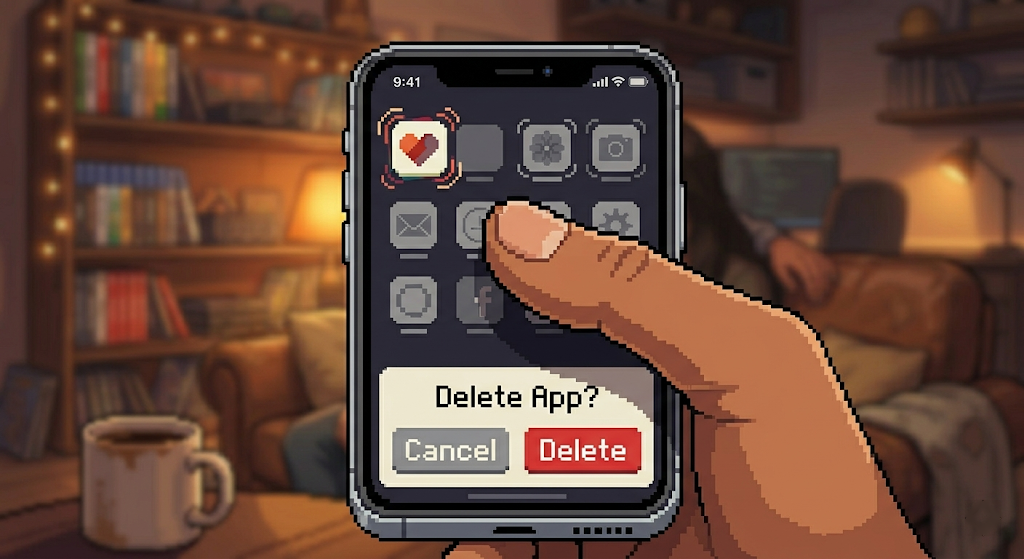
Since you're reading this on a device you've used to manage multiple apps, you already know these are different things. But there's genuine ambiguity here worth clearing up — not everyone realizes that "deleting the app" and "deleting the account" are two separate actions with meaningfully different implications.
Deleting the App
Removes the icon from your phone. Your profile stays live on the platform. Most apps will mark you as inactive after a few days without login, so new people won't see you actively using it — but your profile technically still exists, and your matches are still there. This is the soft version. You've stepped back without closing the door.
Deactivating Your Account
Hides your profile entirely. You're invisible on the platform. Most apps offer this as a pause feature, and you can reactivate without losing your match history. This is the "I'm serious but not quite ready to burn the archive" move. Good middle ground if you're in the early weeks of something exclusive but not ready for permanent.
Deleting Your Account
Full reset. Profile gone, matches gone, conversation history gone. This is the permanent version, and it's the one that actually signals something when you tell someone you did it. There's a reason people say "I deleted the app" and usually mean they deleted their account — the account deletion is the gesture with weight.
None of these steps require the other person to do the same simultaneously. But if you want the version that feels like a real commitment: delete the account, and mention it. Unprompted. That's the modern equivalent of going steady.
What If They Haven't Deleted Theirs?
Ask. Directly. If you've had the exclusivity conversation and agreed you're not seeing other people, asking where they land on the apps is a completely reasonable follow-up — not an ultimatum, just a natural next step after a commitment you both made. If they dodge it or go quiet, that's information worth having sooner rather than later.
After You Delete It
Here's what changes: you stop hedging. There's a cognitive load that comes with keeping options technically open even when you're not using them — a background process running on mental resources you could be spending somewhere better. Once the account is gone and you've had the conversation, a surprising amount of that noise goes quiet.
Here's what doesn't change: everything that was already working. The dates, the easy conversation, the shared whatever-your-thing-is. You didn't manufacture a relationship by having the talk. You named one that already existed.
Seven in ten gamers say they would reduce their game time for a romantic partner, according to SolitaireBliss research. That's not sacrifice — that's someone rearranging their priorities voluntarily because something matters more. If you've already been doing that, without even tracking it, you have your answer.
The app had a job. It got you here. Delete it, have the conversation, and get on with the actual thing.
Rook Holloway is a staff writer at Dork Date who has strong opinions about questlines and a healthy respect for the save-before-a-boss-fight principle in all areas of life.