The Science Behind Why Nerds Fall Hard and Fast
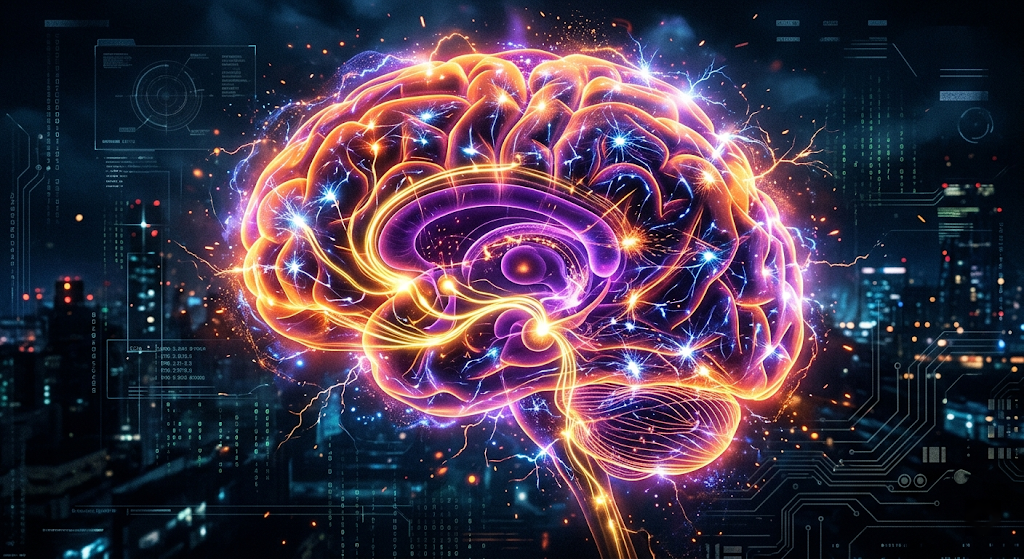
Nerds don't just catch feelings — they hyperfocus on them. Here's the psychology and neuroscience behind why analytical, introverted, and obsessive personalities tend to fall fast and feel everything deeply.
You didn't just catch feelings. You catalogued them, cross-referenced them, built a mental model of the person, and woke up at 3am replaying a conversation from four days ago wondering if you read the tone right. If that sounds familiar — you're not broken. You're just wired this way. And there's actual neuroscience behind it.
Nerds, gamers, and the analytically-inclined don't fall casually. We fall like we're speedrunning a final boss with everything on the line — fast, intense, and completely consumed. The question isn't whether you felt too much. The question is why — and the answer, it turns out, is buried in brain chemistry, evolutionary psychology, and a handful of genuinely fascinating studies that explain the whole thing.
Your Brain in Love Is Literally on Drugs
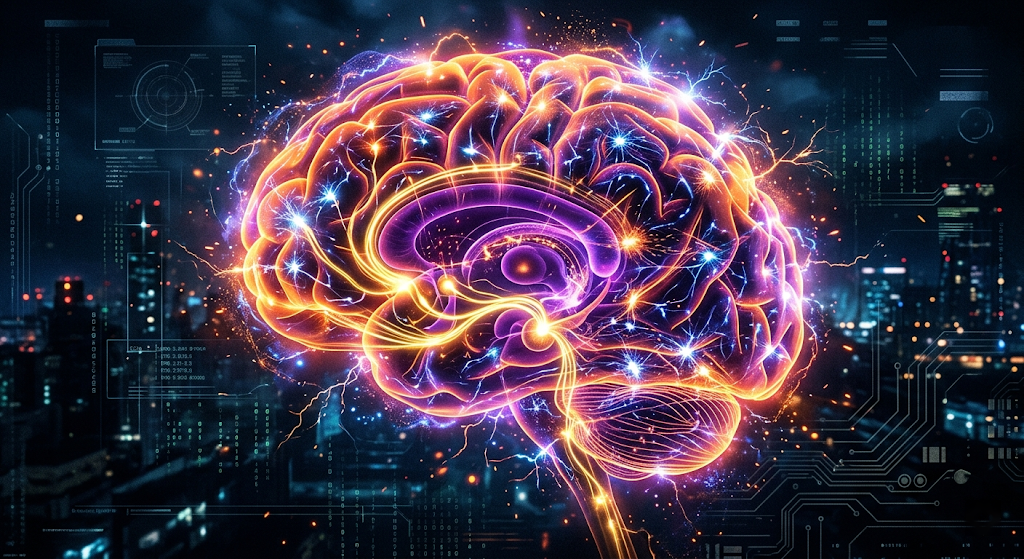
In 2005, neuroscientist Helen Fisher and her team at Rutgers put people who were intensely in love into fMRI machines and watched what happened. The results were striking: viewing a photo of a romantic partner activated the ventral tegmental area (VTA) and nucleus accumbens — the brain's core dopamine reward circuitry. The same regions that light up for cocaine.
Let that land for a second. Fisher's study, published in the Journal of Neurophysiology, concluded that romantic love isn't just an emotion — it's a motivation and reward drive. Your brain doesn't just feel love. It craves it the same way it craves a hit. The intensity isn't poetic metaphor. It's neurochemical reality.
And here's the part that doesn't get talked about enough: it doesn't always wear off the way you'd expect. A follow-up study from Stony Brook University (Acevedo et al., 2011) found the same intensity of dopamine-rich brain activity in people married an average of 21 years as in newly-in-love couples. The drive can stay live for decades. For some people, it never really downshifts.
Why this hits harder for nerd brains: Dopamine-seeking personalities — the kind drawn to games, puzzles, deep dives, and mastery — already have reward circuits running hot. When you add a new person into that system, the signal amplifies. You're not overreacting. You're responding exactly as your dopamine-wired brain was built to.
The Dopamine-Starved Brain Goes All-In
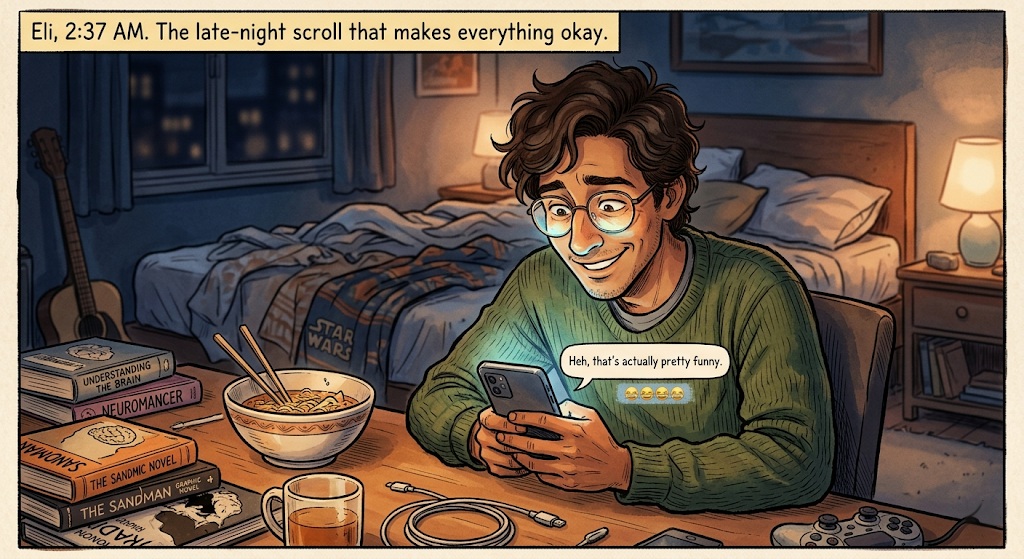
Here's where it gets even more specific to this community. According to a 2024 analysis by Staley et al. via CHADD, using National Center for Health Statistics data, roughly 6% of U.S. adults — approximately 15.5 million people — have been diagnosed with ADHD. Given how dramatically the condition is underdiagnosed (especially in women, and in adults who weren't the hyperactive kid in class), the real prevalence is almost certainly higher.
ADHD is massively overrepresented in gaming, tech, and nerd communities. The same novelty-seeking, pattern-finding, hyper-engaged brain that makes someone phenomenal at speedrunning a game or building elaborate fantasy lore also makes them incredibly susceptible to romantic hyperfocus.
The ADHD brain runs on a chronic dopamine deficit at baseline. When a new relationship begins — with all the novelty, uncertainty, and emotional charge that entails — the brain gets a dopamine surge unlike most things it encounters. And that surge activates hyperfocus mode.
What does that look like in practice? According to SimplyPsychology.org's April 2025 analysis of ADHD and relationships: sending affectionate messages at all hours, remembering every tiny detail the person mentioned weeks ago, spending every possible moment with them, feeling like this person has consumed your entire mental bandwidth. From the outside, it can look like love bombing. It isn't. It's neurochemical enthusiasm — and it's completely involuntary.
The shadow side worth knowing: The hyperfocus can fade when novelty wears off. That's real, and it's worth being honest about. But the intensity in those early stages? That's not performance. That's your brain doing exactly what it was designed to do, just louder than most.
OCD Mode: Why You Can't Stop Thinking About Them
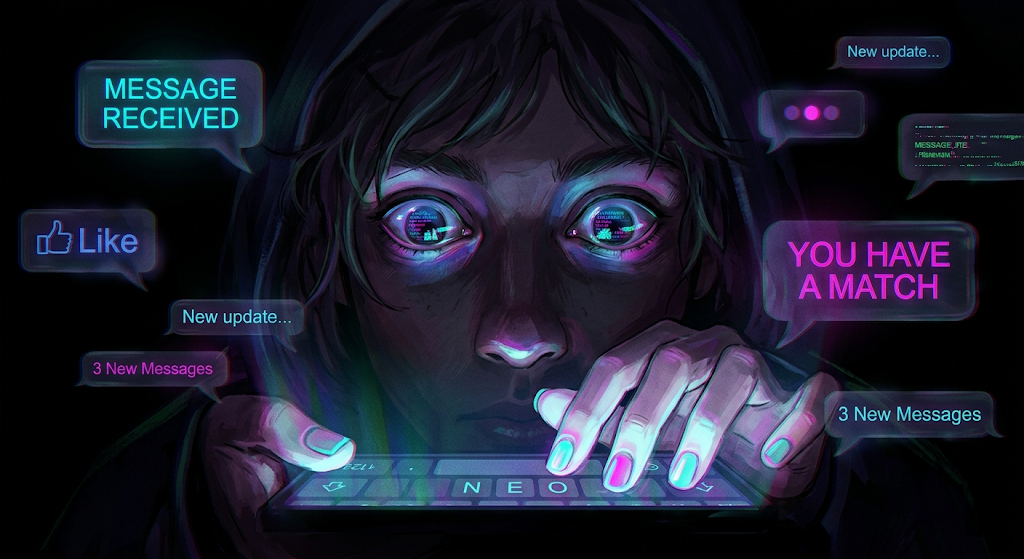
A 1999 study by Marazziti, Akiskal, Rossi, and Cassano — published in Psychological Medicine by Cambridge University Press — found something that should genuinely stop you mid-scroll: people in the early stages of romantic love had serotonin transporter levels statistically indistinguishable from OCD patients.
Read that again. Your brain, when you're newly in love, is functioning at the same serotonin level as someone with a clinical obsessive-compulsive disorder diagnosis. Low serotonin is associated with intrusive, repetitive, involuntary thoughts — which is exactly what "I keep thinking about them" actually is at the neurological level. Not weakness. Not neediness. Brain chemistry.
The researchers themselves noted methodological limits to the study, so it's worth framing as "research suggests" rather than established consensus. But the broader finding — that early romantic love produces the same cognitive patterns as clinical obsession — aligns with a lot of what we know about infatuation and intrusive thought.
For analytical, ruminative brains, this loop runs deeper. If you're the type who already thinks through every scenario, replays conversations looking for subtext, and stress-tests your mental models against new data — dropping into a serotonin-depleted obsessive loop is going to hit you harder than it hits someone who processes more superficially. You're not overthinking. Your brain literally doesn't have the serotonin available to turn it off.
Limerence: When a Crush Becomes a Mission

In 1979, psychologist Dorothy Tennov published Love and Limerence: The Experience of Being in Love, based on interviews with hundreds of people about the experience of intense romantic attachment. She coined the term limerence to describe something she noticed nobody had properly named: an involuntary, obsessive state of romantic infatuation that isn't quite the same thing as love.
Limerence involves intrusive, involuntary thoughts about someone — sometimes consuming hours per day. According to Psychology Today's updated 2025 coverage of Tennov's work, it typically lasts one to three years. Tennov described it as something that "happens to us" — not a decision, not a choice. A case study published in PMC (PMC8641115) documents it causing "significant loss of productivity and emotional distress." Which, yeah. That tracks.
Nerds are limerence superconductors. The analytical brain doesn't just feel the obsession passively — it feeds it. You dissect every interaction, assign meaning to response times and word choices, and build elaborate mental models of the relationship. You track every data point, every implication of every text. The loop is self-reinforcing because the brain doing the obsessing is also generating new angles to obsess over.
Worth noting: limerence isn't love — Tennov was careful about that distinction. It's the initial obsessive state, the burning phase before things (if they're good) settle into something more durable. Knowing it has a name and a lifespan doesn't make it less intense. But it does make it less mysterious.
The Special Interest Brain: When a Person Becomes the Obsession
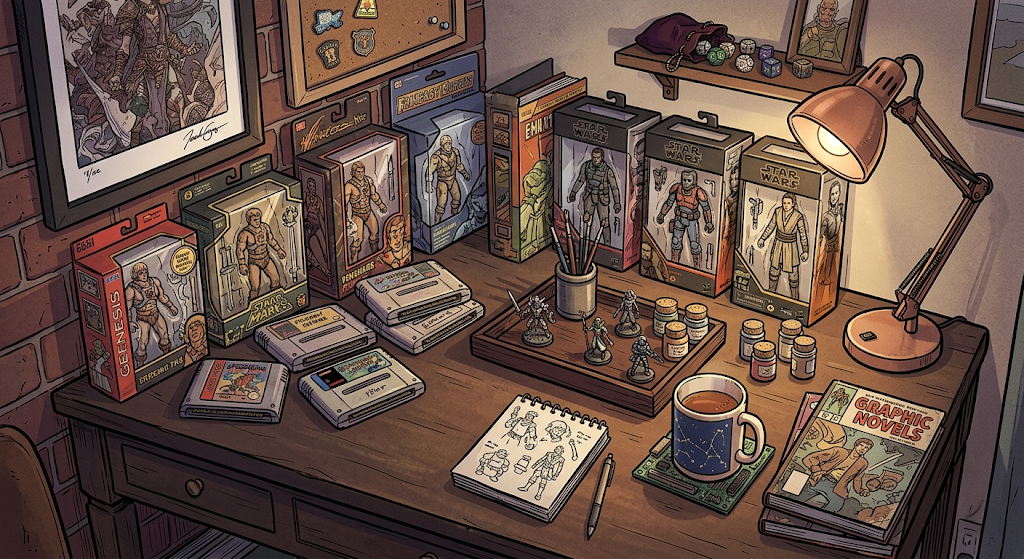
Monotropism is a framework developed by researcher Dinah Murray (2018) to describe a cognitive pattern common in autistic people: the tendency to focus intensely on a small number of interests at any given time, going deep rather than wide. The DSM-5-TR lists "highly restricted, fixated interests that are abnormal in intensity or focus" as a core diagnostic criterion for autism spectrum disorder.
The overlap between nerd communities and autism spectrum traits is culturally and statistically significant. Gaming, anime, tabletop RPGs, speculative fiction — these spaces have higher-than-average rates of people who think in this pattern. And within that framework, something remarkable can happen when a person becomes a special interest.
It's not a metaphor. For many neurodivergent people, a romantic partner literally gets categorized in the same cognitive space as a beloved game franchise or a deeply-researched topic. They get studied, memorized, and treasured with the same all-consuming intensity. You learn their preferences, their patterns, their history. You think about them the way you think about the things you love — which is to say, constantly, thoroughly, and with genuine care for the details.
This is one of the most profound ways a person can be loved. It's also a lot to receive, especially from someone who didn't expect that level of attention and retention. But it isn't a malfunction. It's the monotropic brain doing exactly what it does — going completely, faithfully all-in on what it decides matters.
Introvert Math: Fewer People, Bigger Feelings

Susan Cain's Quiet (2012) put a number on it: introverts comprise roughly one-third to one-half of the U.S. population. More recent surveys of Myers-Briggs respondents suggest the number may be closer to half. That's a lot of people who process deeply, socialize selectively, and tend to have smaller but more meaningful social networks.
Here's the math: if you have fewer close connections by nature, each individual relationship carries more weight. An extrovert might have twenty people they'd genuinely call real friends. An introvert might have four. When one of those four becomes a romantic interest — or when someone new actually manages to break through the walls and get in — the emotional significance is proportionally enormous. It's not the same as what the extrovert feels. It can't be.
Attachment research adds another layer — Feeney, Noller & Callan (1994) found that securely attached individuals show greater longevity, trust, commitment, and interdependence in their relationships. The introvert who lets someone in isn't being clingy or intense without reason. They've made a real decision. This person passed a filter that most people don't.
There's also the experience factor. Nerd communities — by culture, by social circumstance, by the way school systems have historically treated weird kids — often have less dating experience going into young adulthood. When a first real connection happens, it doesn't just feel new. It feels revelatory. The feelings don't have prior experience to normalize against. They hit at full amplitude, because there's no callus built up yet.
None of this is a bug. Falling hard is what happens when a brain that runs deep, focuses intensely, and doesn't do things halfway encounters something it genuinely wants. The risks are real — limerence can blur into fixation, hyperfocus can fade once novelty wears off, the intensity can overwhelm someone who wasn't expecting it. Those things happen. They're worth knowing about.
But the capacity to feel this way is also the same capacity that makes someone a devoted partner, an obsessive builder of shared worlds, a person who actually remembers what you said and actually shows up. That's not nothing. That's actually kind of everything.
Find the People Who Can Keep Up
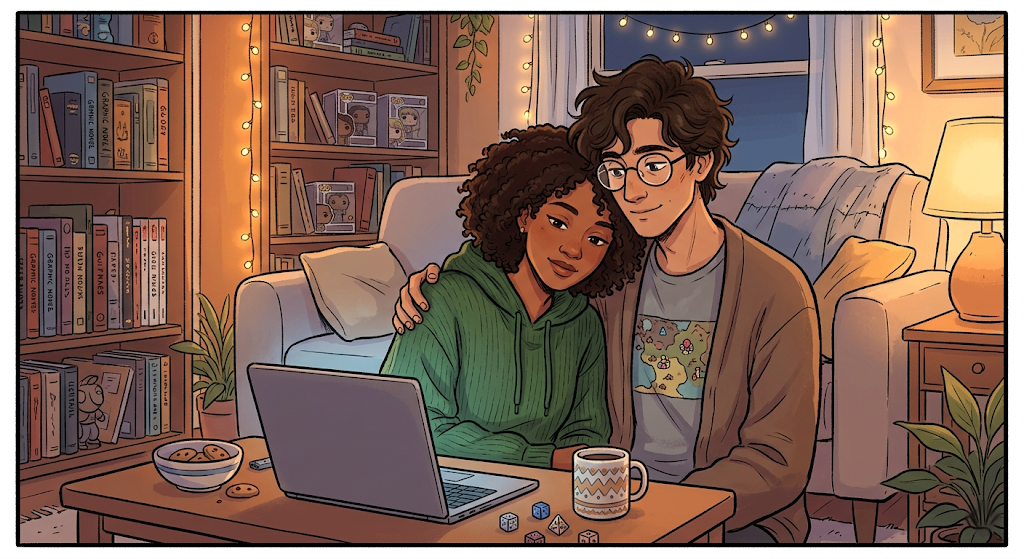
Falling hard isn't a design flaw to manage down — it's the output of a brain that goes all-in on what matters to it. The right person won't be overwhelmed by the depth. They'll meet it. And more often than not, you find them inside a world you already share.
Worth Knowing
If the limerence loop sounds familiar — fixating on someone who shares your specific niche interests, replaying every interaction — there's something to be said for meeting people inside a community where you already have shared context. Dork Date's Guilds are built exactly for that: join one around your thing, actually get to know people there, and let connections develop from within that shared world rather than cold-starting from scratch.