Streaming Together as a Couple: What Actually Works
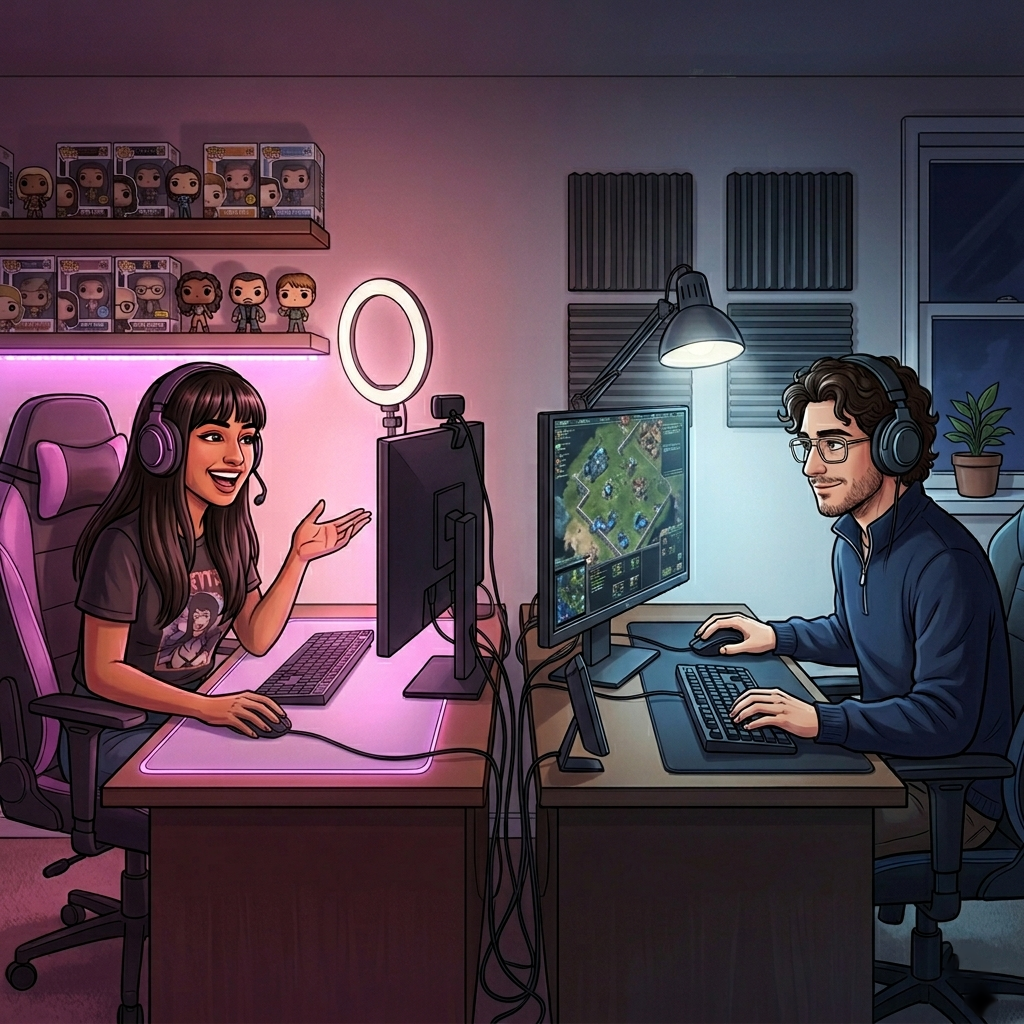
There are 7.3 million people streaming on Twitch every month. Most of them average fewer than five viewers. The platform is enormous, the competition is functionally invisible, and somewhere in that pool, a non-trivial number of those streamers are live with a partner — a spouse, a boyfriend, a girlfriend, someone they're actively building a life with — because shared streaming felt like the natural extension of everything else they already do together. That's not a bad reason to start. It's also not a plan.
This post is not about mic placement or capture cards or which streaming software has the best noise gate. It's about what actually determines whether streaming together goes well or doesn't. The answer has almost nothing to do with your gear, and almost everything to do with dynamics that were present in your relationship before you ever hit Go Live.
The Setup Nobody Actually Reads
The infrastructure is genuinely good right now. Twitch's Stream Together feature makes co-broadcasting a clean, stable experience — no Discord workarounds, no split-screen hacks, no dedicated second machine just to handle the audio routing. Twitch's Shared Chat, launched in September 2024, merges both channels' feeds into one stream in real time, so a couple co-streaming actually shares an audience in the moment rather than just talking past each other from separate windows. The tech has solved the tech problems.
What the tech doesn't solve: the moment your partner's chat roasts your aim mid-match and you have to keep smiling.
The questions worth asking before you start aren't about software. They're about what your relationship looks like when it's visible, documented, and performing for an audience — and whether you've sorted out the things that need to be sorted out before you hand a room full of strangers a front-row seat to your dynamic.
The Three Ways It Goes Wrong
The Attention Asymmetry Problem
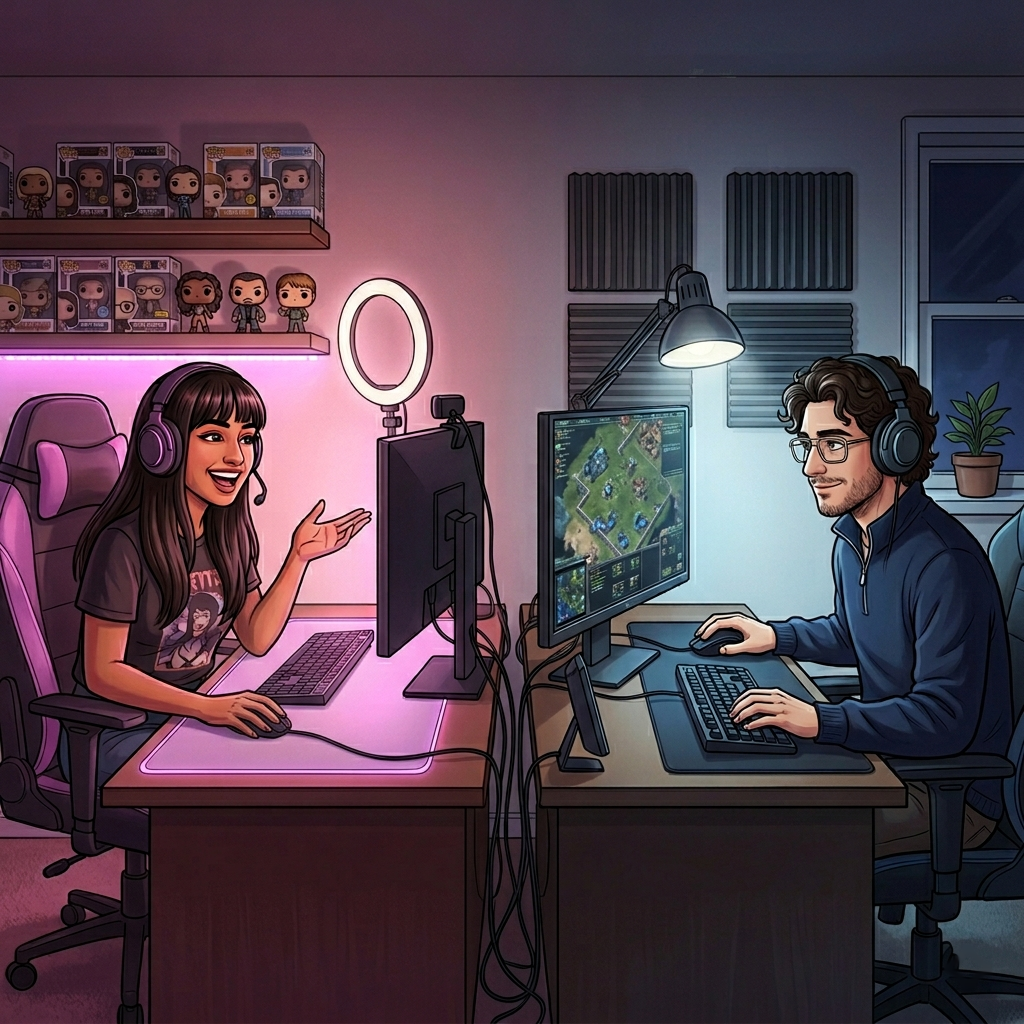
When two people share a stream, the chat does not distribute attention equally. It never does. One partner will draw more messages, more clipped moments, more engagement — because of personality, because of game, because of timing, because audiences are irrational systems that respond to energy rather than fairness. The other partner will notice.
This is one of the most consistently documented tensions among streaming couples online. The pattern that keeps recurring: one partner is naturally high-energy on camera, draws chat interaction, clips easily. The other partner is the better player but quieter on stream. Chat gravitates to the talker. The quieter one doesn't say anything. Then they do.
The secondary version is subtler: the audience develops a parasocial attachment to one partner specifically. Viewers clip one person more. Follower counts start diverging in a visible direction. The algorithm doesn't have feelings about any of this. The couple does.
The Energy Mismatch Problem
One of you is a natural on camera — immediate comfort, quick reactions, instinctive "content brain" that knows what's a clip before it's over. The other is better in private. Funny at the table, warm in a group, but something happens under the recording light that makes them stiff, quieter than usual, or overcompensating in a way that reads as performance rather than personality.
This mismatch is invisible at home. It's extremely visible on stream. What makes it escalate: the camera is also a mirror. The quieter partner watches themselves being "less" in real time, which makes them stiffer, which makes the natural on-camera partner overcompensate to fill the dead air, which makes the quieter one feel more invisible. Neither of them intended any of it. The direction of travel is the same regardless.
The Skill Gap as Public Performance
When one partner is significantly better at the game you're streaming together, the skill gap becomes content — which is fine, if both people have explicitly agreed it's fine. The problem is when no one has said anything about it. The better player becomes who the chat watches. Game outcomes get tied to one person's performance. And when the worse player makes a mistake that wipes the run, chat will say something about it. On stream. In front of both of them. Timestamped in the VOD.
Being corrected by your partner in front of forty viewers lands differently than being corrected at home. It's a humiliation vector the relationship didn't have before the stream started. Once it exists, it doesn't go away quietly.
Whose Channel Is This, Anyway?
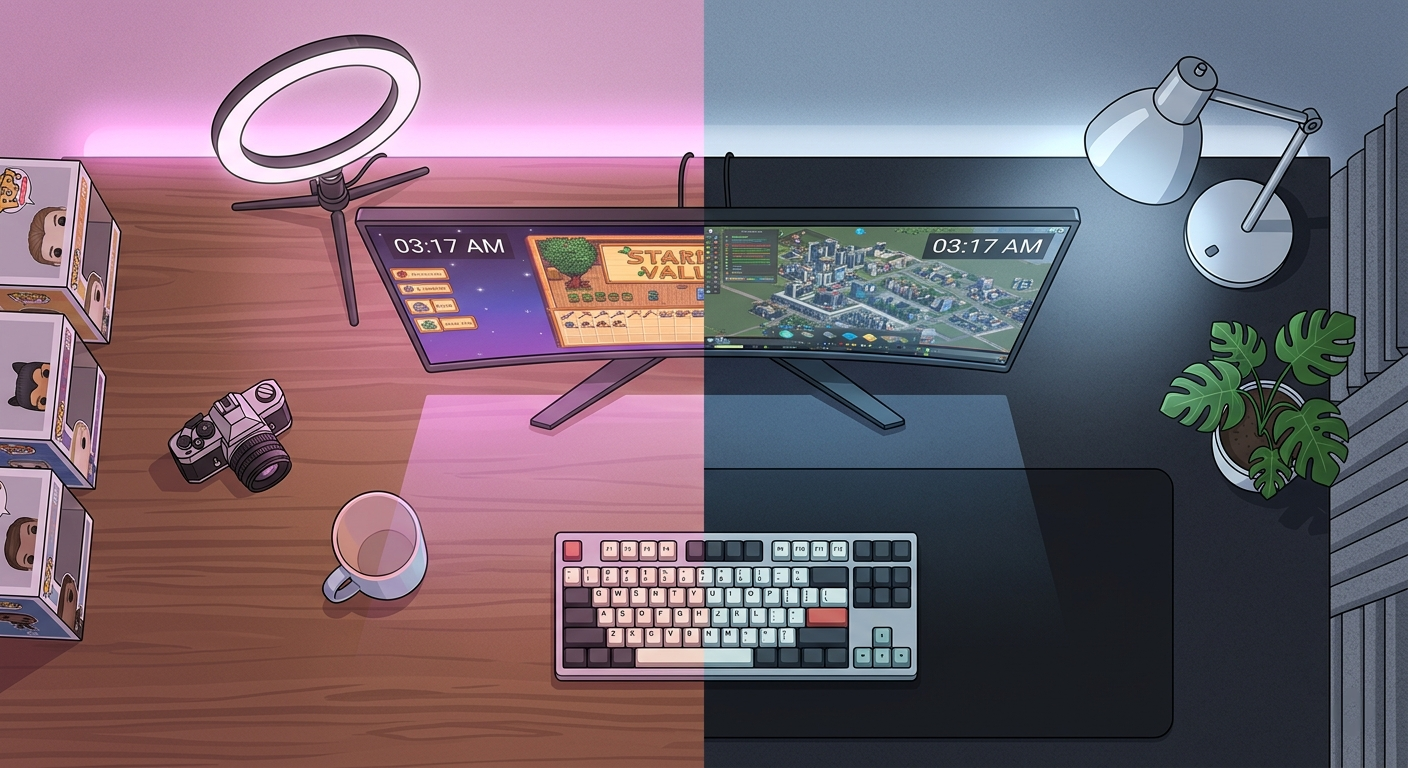
The question most couples don't ask early enough: are you streaming together onto one shared channel, or are you each running separate channels and co-streaming via Stream Together?
Both approaches work. They solve different problems.
A single shared channel is simpler — one community, one schedule, one set of metrics to track. But someone becomes the host by default, and the other becomes a recurring guest in their own stream. That asymmetry is easy to tolerate when the whole thing feels like a fun experiment. It gets harder when one person's following is larger, or when the quieter partner starts feeling like a featured segment rather than a co-creator. "Whose channel is this" is not a question you want to be answering six months in, when the answer has already been decided by accumulated default.
Separate channels with Twitch's Stream Together and Shared Chat preserves both partners' independent identities. Both grow their own communities. Both get full credit for the content. The structural question of host-versus-guest never quietly resolves itself in one person's favor.
If neither of you was already streaming before this, one shared channel is a reasonable starting point. If one of you has an established community and the other is new to it, think carefully about bringing your partner into your existing channel. The generosity is real. So is the power dynamic.
The Schedule Is Not a Calendar Problem
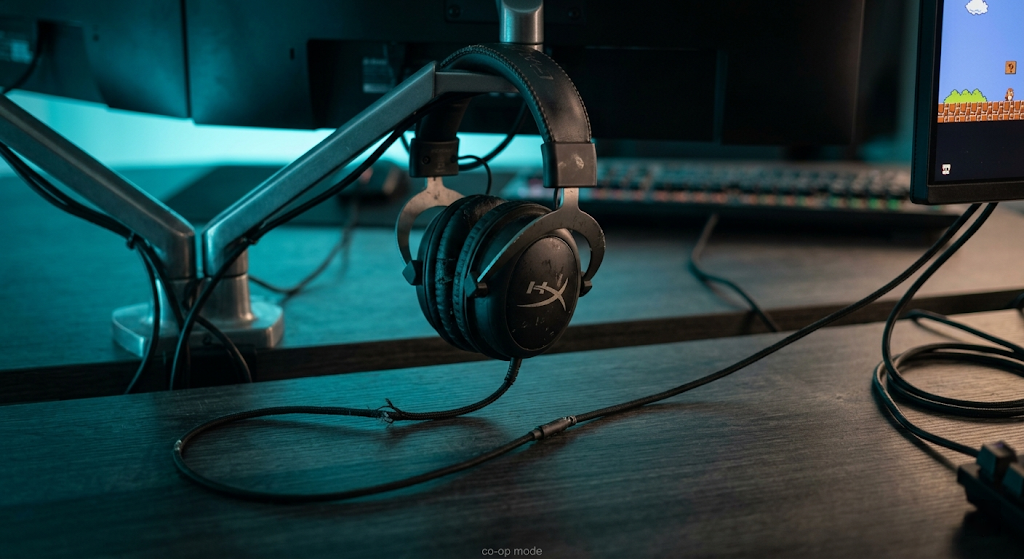
Streaming schedules for couples aren't logistics. They're a negotiation about shared time, competitive attention, and who gets to be "on" and when — and they will surface whose preferences are being defaulted to before either of you has named what's happening.
The specific pattern that causes trouble: both partners want to stream, but their natural peak hours conflict. One person's best audience engagement happens late evening; the other performs better earlier. One has a strong Saturday attendance; the other's followers are weekday viewers. One person's scheduled stream regularly bleeds into the other's wind-down time. The schedule ends up centering one person's rhythm without anyone having actually decided that's what they wanted.
Twitch's audience skews weekend-heavy with weekday fluctuation — there's no universally right answer to when to stream. Which means there's also no external pressure to resolve the schedule conversation for you. You have to have it explicitly. Treat it like any shared commitment that actually affects your daily life: something both people agree to and both people can modify. Not "I'm streaming Thursday, join if you want." A real conversation, with real input from both sides, before the pattern becomes the policy.
Chat Is the Third Person in the Room
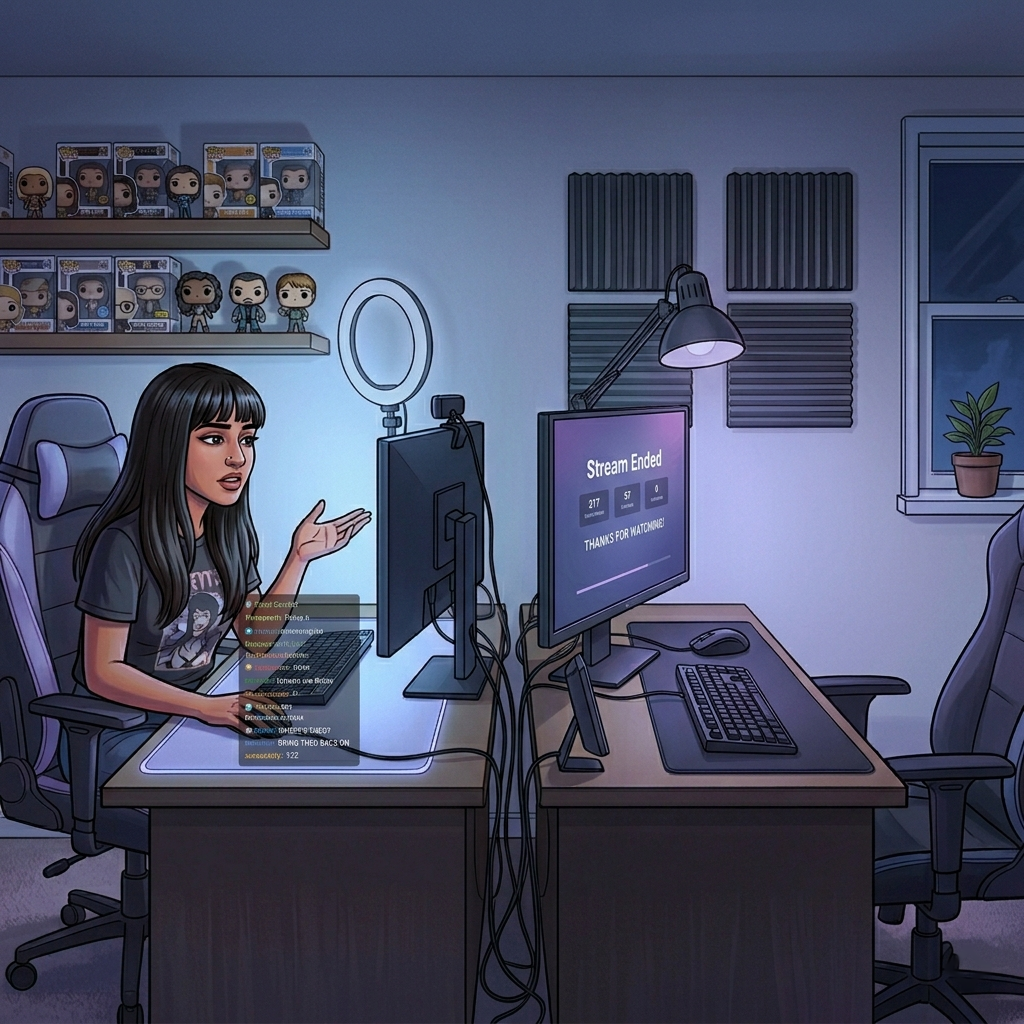
Twitch had 240 million monthly active users in 2024, 72% of them under 34. A meaningful portion of any audience will develop opinions about the people they watch regularly — about personality, about who they prefer, about relationship dynamics they can only observe through a camera and a chat box. Those opinions surface in the chat. Sometimes helpfully. Sometimes in exactly the way you didn't need them to.
The parasocial dynamic with couples is specific: audiences don't stay neutral. They pick favorites. They ask where the other one is when only one of you is on. They comment on friction they think they're detecting. They ship the dynamic they find appealing, which is not always the one that reflects the actual relationship. These aren't malicious moves — it's just what audiences do when they have enough consistent access to develop an attachment. The couple just has to live inside it.
What that means practically: the chat will occasionally surface, as a public comment, something that was already a private tension. Someone types the observation about the missed shot, the interruption, the uneven screen time — the thing both of you have been careful not to say directly to each other. Now it's in the VOD. The chat didn't create the tension. But it has a remarkable ability to find it, announce it, and move on while you're still sitting with it.
What the Good Ones Actually Do
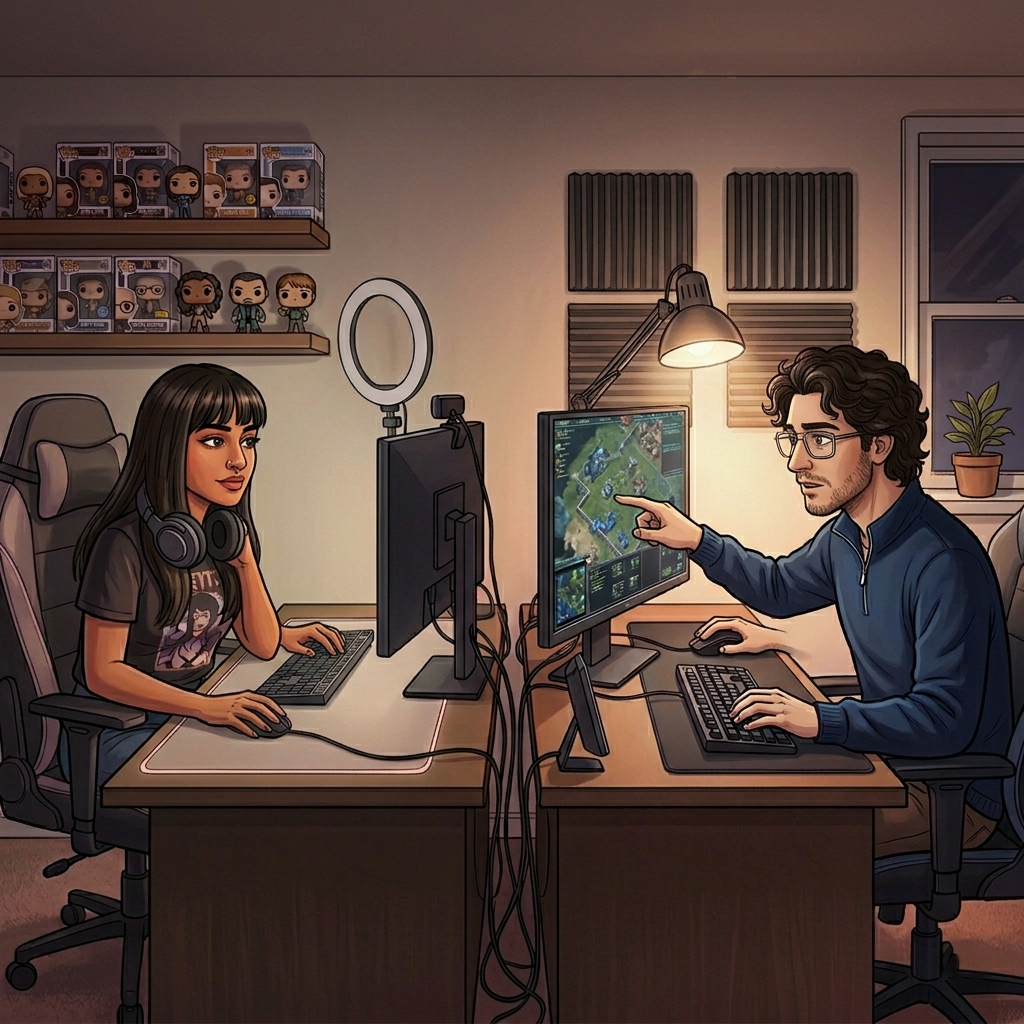
Watch a VOD of Yourself Alone First
Before co-streaming with your partner, stream solo and watch the VOD back. This sounds obvious. Almost no one does it. The reason it matters: getting comfortable performing under recording pressure is its own learning curve, and that curve should not run simultaneously with managing couple dynamics on camera. Solo streaming for even a month before co-streaming separates the "learning the camera" problem from the "managing the relationship on stream" problem. These should be solved in sequence, not simultaneously.
Define the Lanes Before the Stream Starts
The chat attention asymmetry problem has a practical fix: pre-agreed roles. The person who naturally runs chat runs chat — actively, visibly, as their explicit contribution to the session. The person who plays the game plays the game. You're not competing for the camera. You're making different contributions to the same broadcast. The imbalance stops being a sore spot the moment both people have named it on purpose rather than arrived at it by accident and started keeping score.
Debrief After Streams
The single most consistent habit among streaming couples who stay functional over time: they close the loop after the session. Not formally, not at length — a few minutes. How was that? Anything bother you? Is there something worth adjusting? The off-camera debrief is where small friction events get processed before they accumulate into something with no clear origin point. Couples who skip it tend to reach a moment, several months in, where there's a tension neither of them can name precisely — which is the hardest kind to address.
Own the Skill Gap Publicly
If there's a significant difference in skill between you and you're streaming a game where that shows, acknowledge it on stream in a way both of you have agreed to first. The coach-and-student dynamic, the strategy-player-and-chaos-player dynamic, the ongoing bit about how one of you always dies in the tutorial — all of these can be content, if both people have bought in. The gap stops being a humiliation vector the first time both of you laugh about it on camera together. Chat follows the couple's lead on what's a sore spot and what's a bit. Give them a clear signal.
The Part Nobody Puts in the Setup Guide
If streaming together is creating friction, the friction existed before the stream started. The camera didn't generate the tension about whose time gets protected, or who draws the attention, or whose skill level becomes the default standard for how the session goes. It found it. The stream is an exceptionally effective flashlight for things that were already there — dynamics that worked fine in private because they were never visible enough to require a name.
The couples who do this well aren't the ones who had perfect on-camera chemistry from the first session. They're the ones who treated each uncomfortable moment as information rather than an indictment — who took it offline, processed it without an audience watching, and came back to the next stream with something adjusted. That's the whole advantage. It's not a streaming skill. It's a relationship skill that shows up in the stream.
Streaming together will not make your relationship worse. But it will make it legible. Whether that's a good thing depends entirely on what's already there to read.
Sources: Business of Apps — Twitch Statistics 2026 | DemandSage — Twitch User Statistics 2026 | TwitchTracker Live Statistics | StreamScheme — Twitch Stream Together Guide | Twitch Blog — Drop Ins Launch (August 2024) | Twitch Blog — Shared Chat Launch (September 2024) | Dr. NerdLove — Streamer Relationship Dynamics (2024) | r/Twitch — Fiancé stats comparison thread (December 2025) | StreamHub — Collaboration Personality Dynamics (2026)