Speed Dating for Nerds: How to Impress in Five Minutes
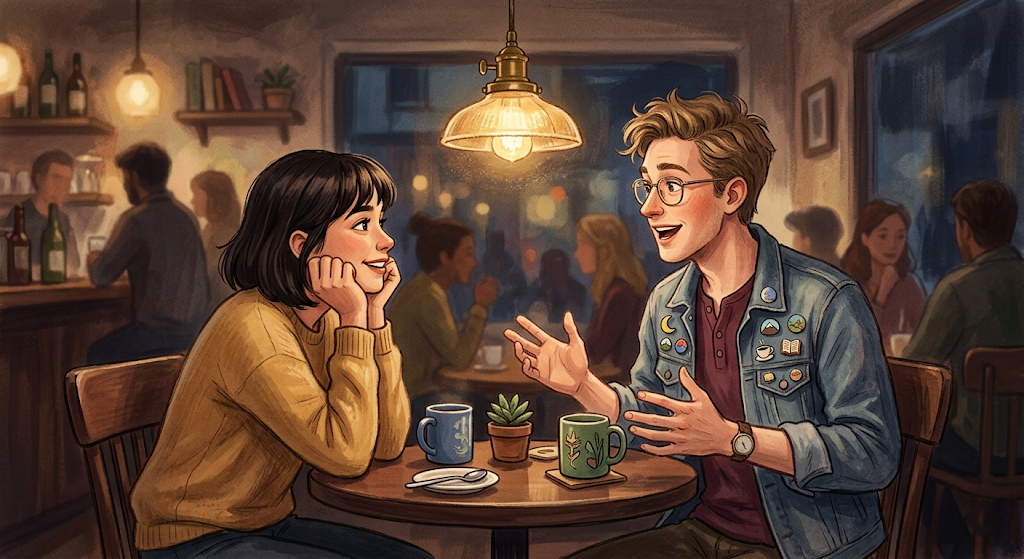
Five minutes isn't much time — unless you actually know what you're doing. Here's how nerds and gamers can make those minutes count at speed dating events.
Five minutes. Sixty seconds of that is probably you trying to remember the person's name. Another thirty is deciding if they're a Renegade or a Paragon. The rest? That's where it either happens — or it very much doesn't.
Speed dating is back. Not "back" the way a retro trend gets ironically revived for one weird season — actually back, with real numbers behind it. Eventbrite data reported by USA Today showed a 63% surge in speed dating events from 2021 to 2022, then a 42% jump in attendance the following year. People are showing up in person because they're tired of swiping their self-worth across a screen. And if you're a nerd, a gamer, or someone who invests serious mental energy in fictional worlds and deep lore — you may have more of an advantage in that room than you realize. This is the part where I tell you that's not a platitude. There's research on this. We're going to use it.
Why Speed Dating Is Having Its Main Character Moment
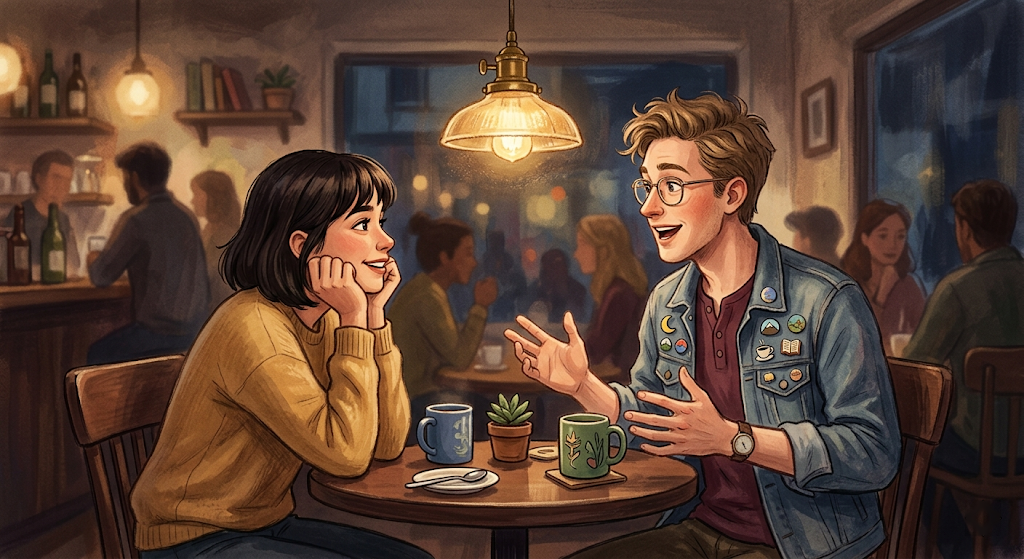
The speed dating revival isn't random. It's a direct response to dating app burnout — a condition that has quietly become one of the defining ailments of modern single life. Match after match, conversation that goes nowhere, the exhausting performance of crafting the perfect opener. Gen Z, despite being the most digitally native generation alive, is increasingly opting out. The numbers are just confirming what anyone who's deleted and reinstalled Hinge three times in a year already suspects.
What makes this moment particularly relevant for nerds is that geek-specific speed dating has expanded alongside the general revival. Gaming bars like Battle & Brew have hosted "1v1 Me IRL" speed dating nights. Fever and similar event platforms run dedicated Geek Speed Dating events in major cities. Conventions have been quietly hosting structured mixer events for years. The infrastructure now exists for you to walk into a room full of people who already speak your language — and do five minutes of conversation with each of them in a low-pressure, high-signal environment. That's a fundamentally different proposition than walking into a random bar and hoping someone starts talking to you about your interests unprompted.
The Format Actually Suits You
Speed dating's structure does something that benefits the nerd archetype specifically: it removes the ambiguity. You know exactly when you start, you know when you stop, and everyone is there for the same explicitly stated reason. There's no guessing whether someone is being friendly or interested. There's no hovering near someone hoping they notice you. You sit down, you talk, you ring a bell, you move. For people who find open-ended unstructured social situations genuinely exhausting, the format itself is a relief.
What Science Actually Says About Five Minutes

Here's something from the research that genuinely changes how to think about those five minutes: thin-slicing studies on first impressions consistently show that your read on someone updates throughout a short interaction — the whole five minutes counts, not just the opening flash. You don't have to nail the first ten seconds to win the round. The conversation has time to find its footing.
This is worth sitting with. Because the dominant anxiety in this situation — that first impressions are sealed in some irreversible flash of judgment — is not quite what's happening. Your impression updates throughout the conversation. Someone who stumbles at the thirty-second mark but finds their footing by minute two is not eliminated. The room is more forgiving than it feels like it is.
The Vulnerability Advantage
Dr. Arthur Aron's research on closeness and connection — the foundation of the famous "36 Questions" study — demonstrated that mutual vulnerability and escalating depth can create genuine closeness between strangers remarkably quickly. The mechanism is real and it's replicable. A nerd who naturally asks interesting questions and listens with actual attention is, without knowing it, running the exact playbook the research recommends. That's not a coincidence. It's a skill set that looks like personality.
The corollary from thin-slicing research (the psychology of rapid impressions) is that authenticity outperforms performance. Trying to be a version of yourself that you think is more appealing tends to read as off — people pick up on the gap between signal and source faster than you'd expect. Being the specific, specific person you actually are, in the room you actually chose to be in, is not a consolation prize. It's the strategy.
The Part Where I Tell You That You're Actually Quite Dateable
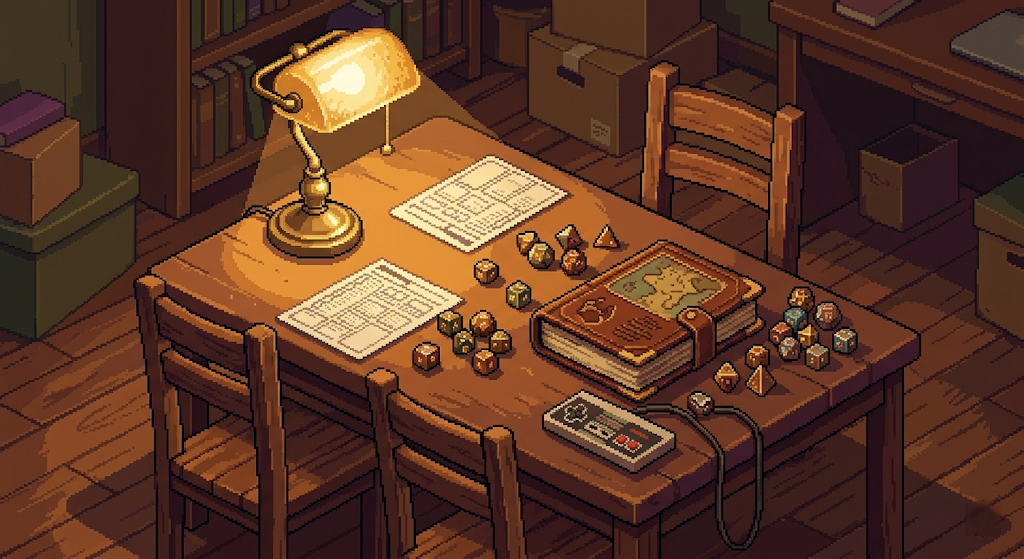
There's a study from IGN and Ipsos MediaCT that tends to surprise people. Fielded in 2008 with 3,000 participants, it found that 55% of gamers were married, and single gamers were twice as likely to go on dates in a given month compared to non-gamers. Gaming households also earned significantly more on average — $79,000 a year versus $54,000 for the U.S. online average at the time. These are not the numbers of a population that struggles with relationships. These are the numbers of a population that has absorbed a cultural narrative about itself that doesn't match the reality.
A separate survey of over 1,000 gamers by SolitaireBliss found that only 53% would mention their gaming interest when meeting someone new, and 29% had actively been embarrassed to bring it up. Nearly one in three said it was hard to date non-gamers. The tension here is legible: gamers are social, datable, and actively dating — but carrying a layer of social shame around their identity that causes them to either suppress it (which reads as bland) or over-explain it (which reads as defensive). Neither serves them.
At a Geek Speed Dating Event, This Changes
The context does the filtering for you. When everyone in the room showed up specifically because they're into nerdy things, the identity you've been half-hiding is the exact thing that makes you interesting. You don't need to lead with it carefully or figure out how to introduce it without "scaring them off." The shared reference frame is the whole premise. A 2024 GravaStar survey found that 79% of gamers believe relationships formed through shared gaming interests are just as valid as those formed through any other channel. The audience already agrees with you. You just have to show up as yourself.
Dork Date's Guilds are built for exactly this dynamic — joining a Guild around your specific interest means any connection you find there is already filtered through shared context before a single message gets sent.
The Actual Obstacle (It's Not What You Think)
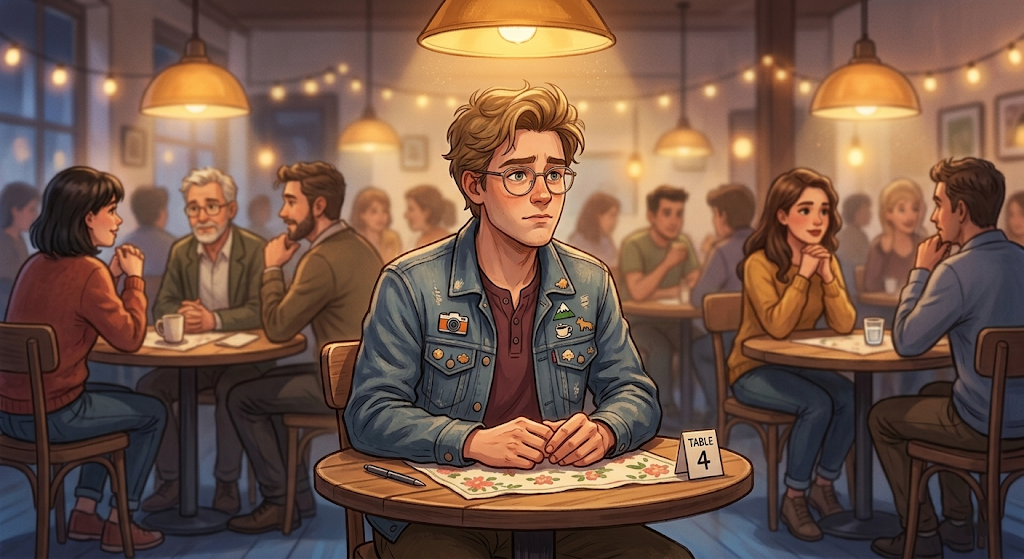
The real friction isn't appeal. It's the gap between who you actually are and what comes out in the first sixty seconds under social pressure. That gap exists for a specific reason: introversion, social conditioning around nerd identity, and the cold-start problem of performing warmth before you've had time to actually warm up.
Between 30% and 50% of people identify as introverted, depending on the measure. For this demographic, the effort cost of cold social interaction is genuinely higher — not because they're worse at it, but because it costs more to get started. The mistake is treating that cost as a permanent deficit rather than a startup expense that drops quickly once the engine is running.
The Self-Consciousness Loop
The same data that shows 29% of gamers being embarrassed about their hobby also shows 49% felt judged by parents for gaming at some point, and 28% by a significant other. That's a meaningful amount of social feedback telling someone that a core part of their identity is a liability in close relationships. It creates a pattern: over-suppress the hobby (come off as generic and forgettable) or surface-level mention it and immediately hedge (come off as apologetic). Both feel inauthentic because both are.
The reframe is simple but it actually works: own it with specificity. "I play video games sometimes" is the version of yourself that got worn down by apology. "I speedrun old Zelda titles for fun" is a person. One of these invites a follow-up question. The other ends the thread.
Your Five-Minute Playbook

Five minutes is not a lot of time to have a full conversation. It is exactly enough time to establish whether you want to have a longer one. That's the actual objective — not to win, not to impress, not to condense your entire personality into 300 seconds. Just: does this person want to talk to me again? Here's how to build toward that answer being yes.
Front-Load Warmth, Not Information
The first sixty seconds are read largely through non-verbal signals — eye contact, how you're sitting, whether you seem like you actually want to be there. These are adjustable. Make eye contact when they sit down. Smile like a person who is genuinely interested in what's about to happen, not like someone performing interest. Your instinct may be to open with a fact about yourself. Resist it. Open with a question that's easy but actually interesting. "What was the last thing you got really into?" is better than "So what do you do?"
Use Nerd Vocabulary Deliberately
Tier lists, alignment charts, "would you rather" hypotheticals, the classic "best/worst" format — these are conversational structures that feel like games, lower the stakes, and reveal character faster than direct questions do. "If your personality were a character class, what would it be?" is a weird question. It is also the kind of weird question that a certain kind of person immediately lights up about. Finding out whether someone is that kind of person is exactly what you're there to do.
Let the Conversation Build
Aron's research on closeness is specifically about escalating depth — conversations that go somewhere, rather than staying at the surface. You don't have to get deep in five minutes, but you should leave the surface. If something they say is interesting, say that it's interesting and ask a follow-up. If something resonates, say it resonates. This reads as genuine attention, which is one of the rarest and most attractive things in any conversation.
What to Do When Your Brain Goes Offline

You will blank. Maybe not every time, maybe not badly, but at some point during the evening the mental buffer is going to run empty and you will sit across from someone and your brain will produce approximately nothing. This is normal. The move is not to power through with nervous filler. The move is to name it and redirect.
"I had something brilliant and I've completely lost it" is genuinely funny and human. It does more for your impression than a fumbled attempt to recover smoothly. Laugh at the moment, then ask a question — any real question. Get them talking. People remember how a conversation felt much more vividly than what was actually said in it. A moment of shared laughter over a brain freeze is more memorable than a clean five minutes of competent small talk.
The Reset Move
If you need a reliable reset question — one that works across the board and almost always generates a real answer — try this: "What's something you're really into right now that most people don't know about?" It's open-ended, it invites specificity, and it signals that you actually want to know. Most people in a speed dating context are not being asked questions that good. You will stand out for having asked it.
Five minutes is short. But it's long enough to ask one interesting question, give one honest answer, and find out whether there's something worth following up. That's not a consolation prize version of connection. That's what connection looks like when it starts. Show up, run the playbook, and find out who's in the room. The bell rings whether you're ready or not — might as well be ready.