Second Date and Beyond: How Gamers Plan Nights That Actually Earn a Third

Getting a second date is one thing — turning it into a third takes actual strategy. Here's how gamers plan dates that build real momentum instead of quietly ghosting into the void.
You got the second date. Which means something went right — and now your brain has decided to spend the next forty-eight hours cataloguing all the ways you can blow it. Welcome to the second date problem: the weird limbo between "this might actually be something" and "I have absolutely no idea what I'm doing."
First dates are basically performance mode. Both people are managing impressions, running evaluations, and trying to seem effortlessly interesting while internally stress-testing every sentence. The second date is different. Some of the armor comes off. The stakes are higher than they look. And if you treat it like a repeat of date one — dinner, pleasant conversation, be charming — you're going to stay in place while momentum quietly drains out of the situation.
Here's the thing most dating advice misses: gamers are actually well-positioned for this stage. Not because of some cute gaming metaphor, but because the instincts that make you good at games — strategy, shared experience, reading progression — are legitimately useful here. The problem is most people don't lean into that. They freeze up and default to dinner again. Which is fine, but fine doesn't earn a third date.
Let's fix that.
Why the Second Date Hits Different

Most people don't realize there's a specific window — right around dates two and three — where things either build into something real or quietly dissolve. The first date is an audition. The second date is the callback. And if there's no clear third, most people assume the answer is no.
The ghosting data is uncomfortable but worth knowing: roughly one in four people have been ghosted after a first date or after a couple of dates, according to a Thriving Center of Psychology survey. Other surveys have found that among dating app users specifically, that number climbs to 41%. The second date is prime ghosting territory — not because people are cruel, but because this is when the uncertainty peaks. Does this person actually like me? Are we compatible in real life? Is this going somewhere? Neither person has enough information yet, and uncertainty makes people disappear.
The Shift You Need to Make
Date one answers: do I want to see this person again? Date two answers something harder: could I actually see myself with this person? It's not about being impressive anymore — it's about being real. And a lot of people fumble that transition because they're still playing the impression game when the other person has already moved on to evaluating compatibility.
The second date needs to actually go somewhere. Not emotionally dramatic, just — deeper. You want to create a moment that didn't exist before, an inside reference you can both call back to, some evidence that spending time together is genuinely good. Dinner at a nice restaurant doesn't do that. Not because there's anything wrong with dinner, but because sitting across from someone in a quiet, semi-formal setting mostly gives you more of the same energy you already established. It's not a next level. It's a holding pattern.
The Gamer Advantage (It's More Real Than You Think)
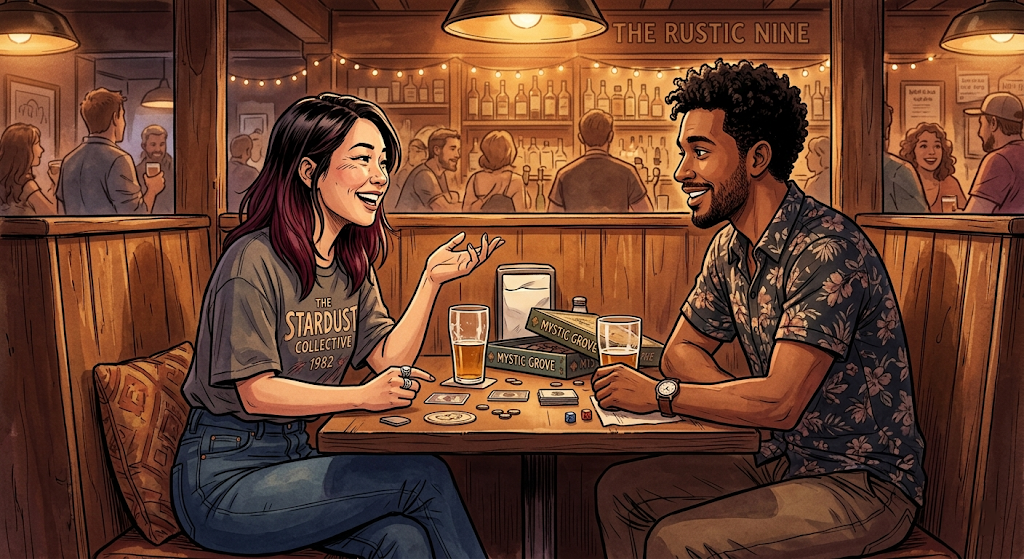
Here's the counterintuitive part. Gamers are actually well-suited for this stage of dating — and there's data to back that up, not just vibes.
A 2017 IGN/Ipsos study found that 55% of gamers are married and single gamers are twice as likely to go out on dates compared to non-gamers. Twice. The "lonely gamer" stereotype is not just wrong — it's backwards. Gamers date more actively than the general population. They just don't get credit for it because the cultural script hasn't caught up.
You Already Know How to Do This
Gamers understand shared experience in a way a lot of people don't. Every co-op session, every campaign run together, every time two people both made the same terrible decision in the same dungeon — those become stories. References. The basis of an inside language. That's exactly what a second date needs to generate, and gamers build that kind of shared narrative instinctively.
There's also a survey finding that's quietly remarkable: 82% of U.S. gamers agreed that playing games can introduce them to new friends. Gamers crave connection — they just need the right low-pressure format to let it happen. A second date that involves doing something together rather than just talking at each other plays directly into that strength. You're not awkward in co-op. You just haven't applied it here yet.
And 43% of gamers say they've developed romantic feelings for someone they met through gaming. Which means the activity itself is proven to generate feelings — not just shared time, but actual attraction. The environment matters. Build the right one.
What Second Dates Actually Need to Work

There's actual research on what makes second dates land, and it maps cleanly onto what gamers already do naturally. Dating platform IRIS Dating, drawing on psychology research, points to three things that determine whether a second date moves forward or stalls.
The Three-Part Framework
A shared activity. Not just being in the same place, but doing something together. This gives you a common reference point and takes pressure off sustained conversation. The activity does some of the emotional work for you. Research published in Communications Biology found that shared experiences — emotional, physical, and even physiological alignment — directly promote social bonding. Gamers who've ever felt the particular bond of surviving a hard raid together already know this on a gut level.
Light novelty. The brain releases dopamine in response to new experiences, and that dopamine gets associated with whoever you're with. This is why dates that involve something slightly new — a neighborhood neither of you has explored, a game you've never played together, a type of food you haven't tried — tend to feel better than familiar ones. The experience doesn't have to be dramatic. It just has to be new enough to register.
One layer deeper disclosure. Not oversharing — nobody wants to hear about your childhood trauma on date two. But going one notch past the first-date surface stuff. Opinions, not just facts. A real story, not just a highlight. What you're actually excited about, not just what sounds good to say. Self-expansion theory, developed by researchers Arthur and Elaine Aron and supported by multiple studies since, confirms that novel shared activities with a romantic interest are associated with stronger feelings of passion and increased relationship satisfaction — including during the early stages when attraction is still forming.
All three of those things, together, in one night. That's the target.
Date Ideas That Work for Gamer Types
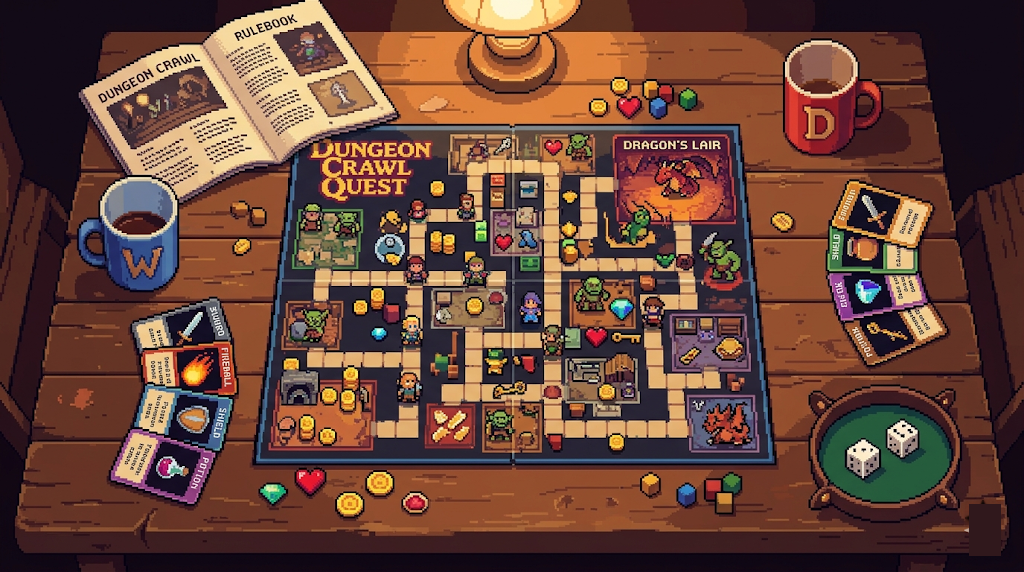
You don't need a grand plan. You need a plan that creates moments. Here are formats that actually work for how gamer-types are wired.
Co-Op Gaming — Done Right
Yes, gaming at home can be a second date. But the framing matters. "Want to come over and play games?" reads like a hangout. "I want to show you this game — I think you'll love it, and we can order food" is a date. Same activity, completely different energy. The difference is intention and structure.
Pick something with a low skill floor and high entertainment ceiling — something that generates moments even if the other person isn't a hardcore gamer. It Takes Two, Overcooked, Stardew Valley, A Way Out, Lovers in a Dangerous Spacetime. Games designed around co-op naturally create collaboration, light frustration, shared victories, and laughter. That's the content you need. Have food ready. Have a clear endpoint (a few hours, not an all-nighter). Make it a date, not a session.
Active and Playful
Mini golf, escape rooms, bowling, a retro arcade bar, axe throwing — these work because they're built around the three pillars: you're doing something together, it's slightly novel, and the low-stakes competition gives you something to talk about that isn't the relationship. You're going to laugh. You're going to trash-talk a little. Something unexpected is going to happen. That's the goal.
Nerdy-but-Public
A board game café. A trivia night at a local bar. A gaming convention, comic shop event, or tabletop meetup. These work especially well for introverts because the environment has built-in content — you're not relying entirely on conversation to carry the night. There's always something to react to, comment on, or play together. You also get to see each other in a context that's authentically yours, which is a layer of self-disclosure without having to say a word about yourself.
How to Ask, and What to Watch For After
You know what you want to do. Now you have to actually ask. This is where a lot of people lose the thread.
The Text You Keep Rewriting
Stop trying to make the invitation perfect. The goal isn't to be impressive — it's to be clear and easy to say yes to. Something like: "I had a really good time. There's this escape room I've been wanting to try — would you want to check it out this weekend?" is infinitely better than the vague "we should hang out again sometime" that doesn't give anyone anything to agree to.
Specific beats open-ended. A date and a thing to do beats "whenever you're free." Show a little thought without making it feel like a presentation. Reference something from the first date if you can — it signals you were actually paying attention, which is more attractive than any well-crafted sentence.
The biggest mistake is waiting so long that momentum dies — text within 24–48 hours of the first date. Not because there's some rule, but because you had a good time and acting like it is fine.
Reading the Signals That You've Earned the Third
A successful second date has a few tells. The conversation got easier, not harder, as the night went on. There was at least one moment that felt like an inside joke forming — something that was just yours, something you'll both remember. Neither person manufactured a reason to leave early. The goodbye was at least a little reluctant.
If those things happened, you don't need to analyze it. You just need to ask for the third date. Same way. Specific, easy to say yes to, not a production.
If you're not sure — ask yourself whether the night generated anything new. Any moment that didn't exist before. Any story. Any reference. If yes, you're building something. If the whole night was just pleasant and nothing happened that you'd actually remember next month, you might have had a fine evening without advancing the game.
The second date is the one where you find out whether you're actually compatible or just mutually polite. That's not a comfortable thing to find out. But it's better to find out here than six months in.
The Short Version
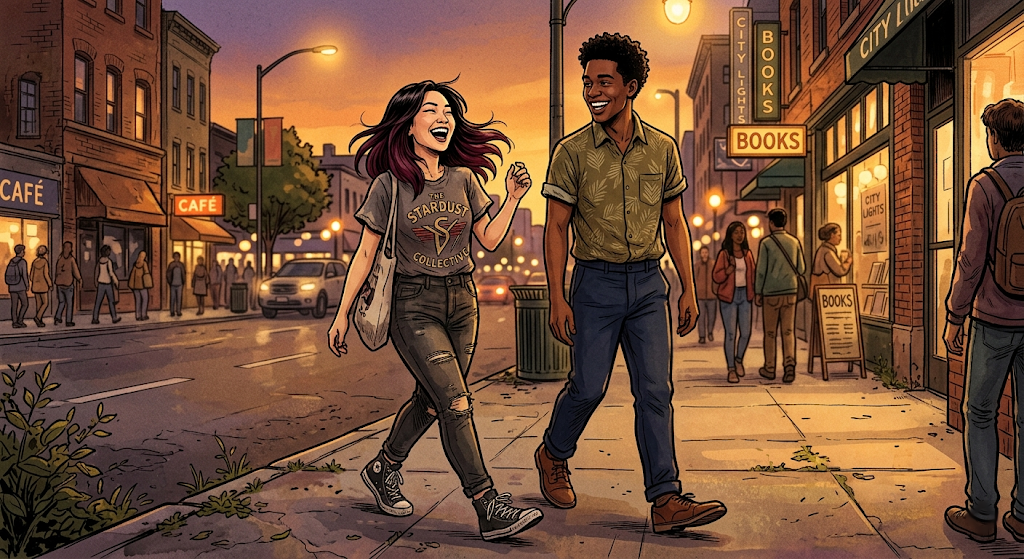
The second date isn't a second first date. It's the beginning of something different — the point where you stop performing and start actually connecting. Gamers are better at this than they get credit for, because you already understand shared experience, you're wired for collaboration, and you know that progress takes actual effort.
The formula isn't complicated: do something together, make it slightly new, go one layer deeper than last time. Pick an activity that generates moments. Ask clearly and specifically. Show up like someone who actually wants to be there — because if you got the second date, that's already true.
The third date isn't earned by being impressive. It's earned by being real about it.
Single gamers are twice as likely to date as their non-gamer counterparts. You're already doing better than the stereotype. Now you just need a plan that matches the energy you already have.
If you're still looking for someone worth planning all this for — Dork Date's Guilds are a good place to start, because you can actually get to know someone in a low-pressure group context before you ever have to figure out what to text.