Sci-Fi Fans vs Fantasy Fans: Who Makes the Better Partner
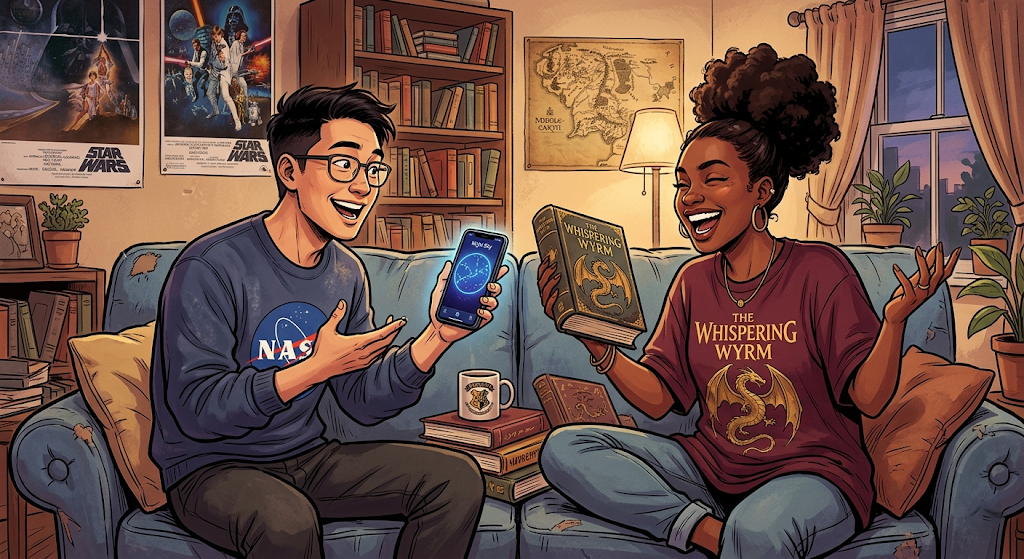
Sci-fi fans and fantasy fans have been debating this for decades. But forget the genre wars — the real question is what each camp is actually like to date.
The Debate Nobody Asked For (But Here We Are)
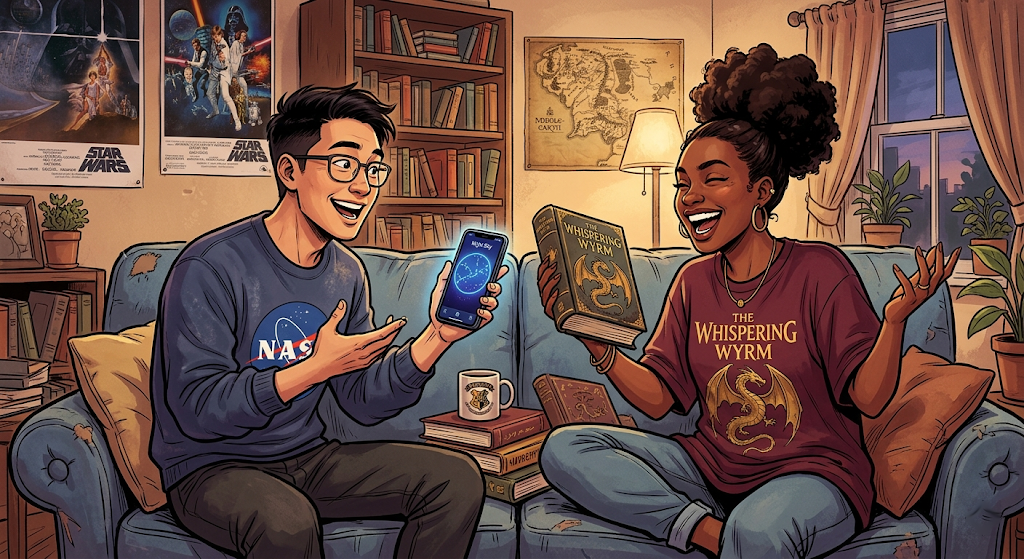
The sci-fi versus fantasy debate has been going on long enough that it has its own generation of tired participants. You've heard the arguments. Sci-fi is grounded in plausible science. Fantasy is just vibes and magic systems. Except that sci-fi fans will spend forty-five minutes explaining why faster-than-light travel is theoretically feasible, and fantasy fans will cite Tolkien's appendices with the energy of someone defending a dissertation. Both camps are, to be clear, deeply committed to being right about fake worlds.
But here's the thing: the genre debate is a distraction. The more interesting question isn't which genre holds up better under scrutiny — it's what the people in these fandoms are actually like to date. Because when you're choosing a partner, you're not choosing a genre. You're choosing someone who will remember how you take your coffee and also probably want to explain a lore thing to you at 11pm on a Tuesday.
So let's set the genre war aside for a minute. This isn't about which stories are better. It's a personality study dressed up as a pub argument, and it happens to have some real research behind it.
What the Research Actually Says
Before we start throwing personality profiles around, let's anchor this in something concrete. In 2018, researchers at the University of Oklahoma published a study in Psychology of Aesthetics, Creativity, and the Arts that measured how 404 adults related to five common unrealistic relationship beliefs — things like expecting a partner to read your mind, believing disagreement is inherently destructive, or assuming sexual perfection should just... happen automatically.
They cross-referenced those beliefs against each participant's exposure to different literary genres. The results were striking. People who scored higher on sci-fi and fantasy exposure were less likely to endorse four out of five of those unrealistic beliefs. Romance fiction readers avoided only one. Classic lit readers, one. SFF readers cleared nearly the whole board.
To put that differently: the data suggests that the average sci-fi or fantasy fan carries fewer relationship myths into their dating life than almost any other literary cohort. Which, if you've ever dated someone who genuinely expected you to just know they were upset without being told, feels like a meaningful credential.
The researchers were careful to note that the causality isn't proven. It could be that people with more grounded relationship views are simply drawn to SFF — not that reading it reshapes your expectations. The correlation, though, is hard to dismiss.
A separate 2018 survey published in SAGE Open added another piece: across over 900 respondents, the average sci-fi and fantasy reader is employed, in their 40s, and — notably — already in a relationship. The lonely nerd stereotype has been taking body blows from the data for a while now.
The Sci-Fi Partner: Analytical, Loyal, Possibly Overthinking It
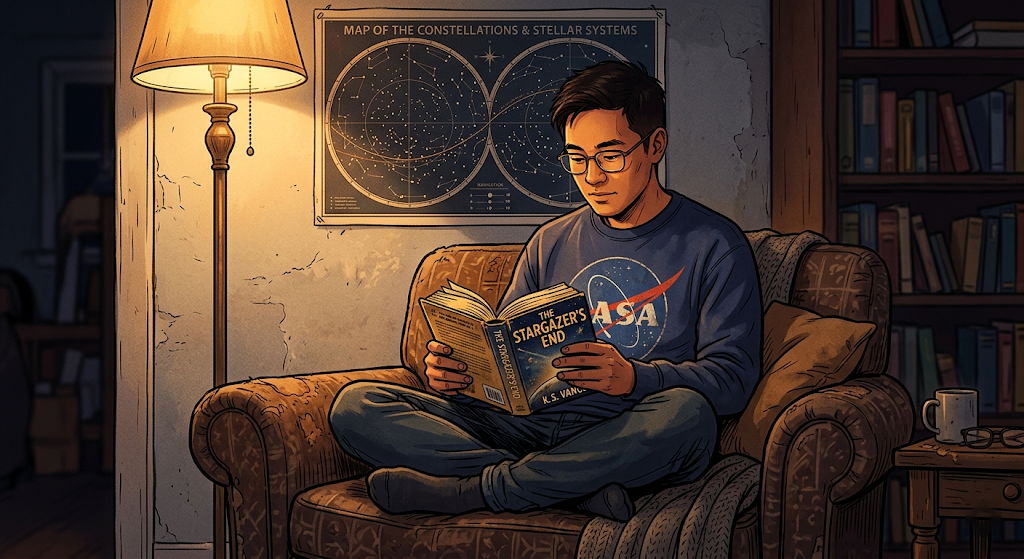
Let's talk about the sci-fi fan as a partner. Personality research has long linked genre preferences to the Big Five traits, and sci-fi readership tends to cluster around the intellect facet of Openness to Experience. That's the cognitive, analytical edge — the part of a person that finds genuine pleasure in systems, logic, and ideas that challenge how the world is supposed to work.
In MBTI terms, you're often looking at INTP and INTJ types — "The Logician" and "The Architect," respectively. These aren't labels to tattoo on anyone, but as patterns go, they're consistent. As 16Personalities puts it, INTJs "seek not just companionship but also intellectual stimulation from their partner — an uncommon quest offering its own unique rewards and challenges." That last phrase is doing a lot of diplomatic work, but the core is real.
Here's what that actually looks like in a relationship:
The strengths: Sci-fi fans tend to be deeply loyal once they're committed. They approach problems — including relationship problems — with a problem-solving mindset, which means they're rarely content to let a conflict just fester. They value honesty at a level that can feel almost aggressive if you're used to people softening everything. And they're intellectually engaged — the kind of person who will get genuinely excited about something you're interested in, not just pretend to listen.
The challenges: The same analytical brain that's great at problem-solving can also over-intellectualize things that require a softer touch. Vulnerability doesn't come naturally to everyone in this camp, and sometimes "let me reason through why you're upset" lands worse than just sitting with someone in a quiet room. Emotional fluency is a skill, and for some sci-fi fans, it requires more active development than systems-thinking does.
None of this is a flaw — it's a profile. And a profile you can work with, if you know what you're getting.
The Fantasy Partner: Emotionally All-In, Occasionally Idealistic
Fantasy fans tend to land on the other facet of Openness — the aesthetic, empathetic edge. The research here points toward INFP and INFJ personality patterns: "The Mediator" and "The Advocate." Where sci-fi fans are drawn to imagining how the world could work differently, fantasy fans are often drawn to how people — even imaginary ones — feel and change and connect across epic stakes.
The 16Personalities profile for INFPs describes them as "dreamers and idealists, especially when it comes to romance." That's accurate, and it cuts both ways.
The strengths: Fantasy fans tend to be emotionally available, deeply invested in the people they love, and creative in the way they express that investment. Reading fiction — especially character-driven epic fantasy — correlates with higher empathy scores and stronger Theory of Mind, the ability to accurately model what another person is thinking and feeling. (The causal link is debated in research, but the correlation is real.) A partner who instinctively tries to understand your inner life is not a small thing.
The challenges: The idealism cuts both ways. Fantasy fans can sometimes put partners on a pedestal — a phenomenon that MBTI researcher Dario Nardi has written about in the context of INFP relationships. The gap between the person you imagined and the actual human who forgets to take out the trash can create friction. The good news, circling back to the Stern et al. data, is that SFF fans as a group hold fewer unrealistic relationship expectations overall. The idealism may be more about emotional investment than delusion about what a real relationship looks like.
What you're getting with a fantasy fan is someone who will take the relationship seriously as a story — someone who cares about the arc of it, the meaning of it, the moments that matter. That's a real thing to want in a partner.
The Numbers That Change the Dating Math
Here's a stat that matters more than it might seem. According to a Statista survey of 2,273 US adult readers, the fantasy genre is read nearly equally by men and women. Sci-fi, by contrast, skews statistically more male.
For anyone who's ever tried to date within their fandom, this is actually useful information. If you're a woman looking for a partner who shares your genre interests, the fantasy community offers a much broader and more gender-balanced dating pool. If you're a man looking for the same thing and you've been primarily hanging around hard sci-fi spaces, the math there is different — and switching contexts might open things up considerably.
The broader takeaway: both fandoms represent roughly 25–26% of adult US readers combined, according to the same Statista data. That's a niche audience, but a high-affinity one. People who identify as SFF fans tend to identify strongly — fandom isn't a casual label for most of them. Which means shared fandom, when you find it, tends to carry more relational weight than a shared taste in, say, procedural dramas.
Finding someone in your specific corner of the fandom matters more than it might sound. Dork Date's Guilds are built for exactly that logic — join the community around your thing, let the connection develop naturally inside a space where the fandom is already assumed, not something you have to explain or apologize for.
What If You're Both? (Most of You Are)
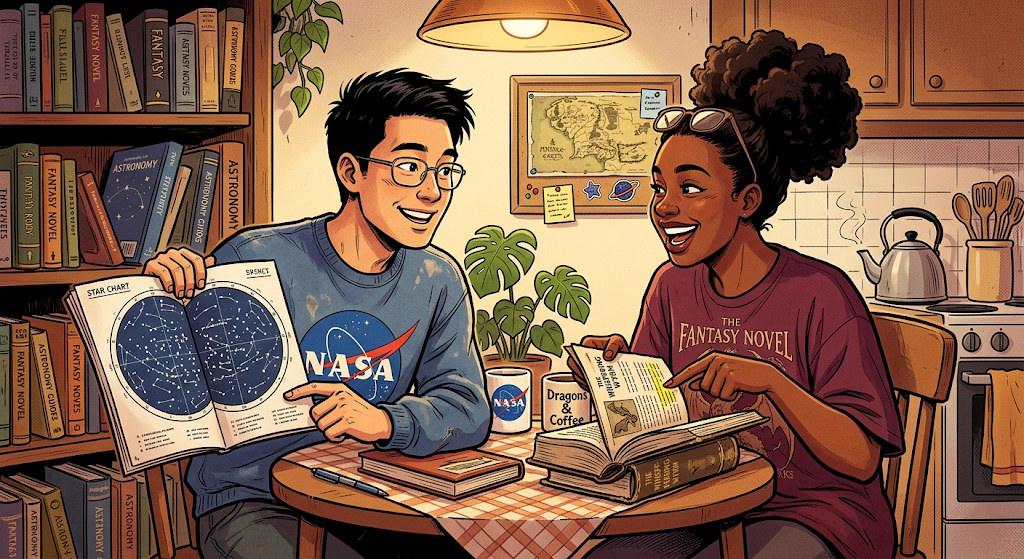
Here's the thing that gets lost in the framing of this debate: the overlap between sci-fi fans and fantasy fans is enormous. The Menadue and Jacups survey that found the average reader is in their 40s and partnered? It covered sci-fi and fantasy together — because most people who read one also read the other.
The Stern et al. study grouped them the same way, for the same reason. Statistically speaking, trying to separate a "pure" sci-fi fan from a "pure" fantasy fan is like trying to find someone who exclusively watches dramas and has never once sat through an action sequence. The genres bleed into each other, and so do the people.
What the personality research is really mapping is a tendency — a lean. Some people come to SFF through the logic and systems (and end up reading Le Guin for the anthropology and Asimov for the puzzles). Some come through the emotional and mythic resonance (and end up reading Sanderson for the character arcs and N.K. Jemisin for the world-ending stakes). Most are somewhere in the middle, code-switching between genres based on what they need from a story in a given season of life.
Which means the real compatibility question isn't "sci-fi or fantasy." It's whether your partner shows up with the same level of genuine investment in imaginary worlds that you do. The specific worlds are almost beside the point. Almost.
So Who Makes the Better Partner?
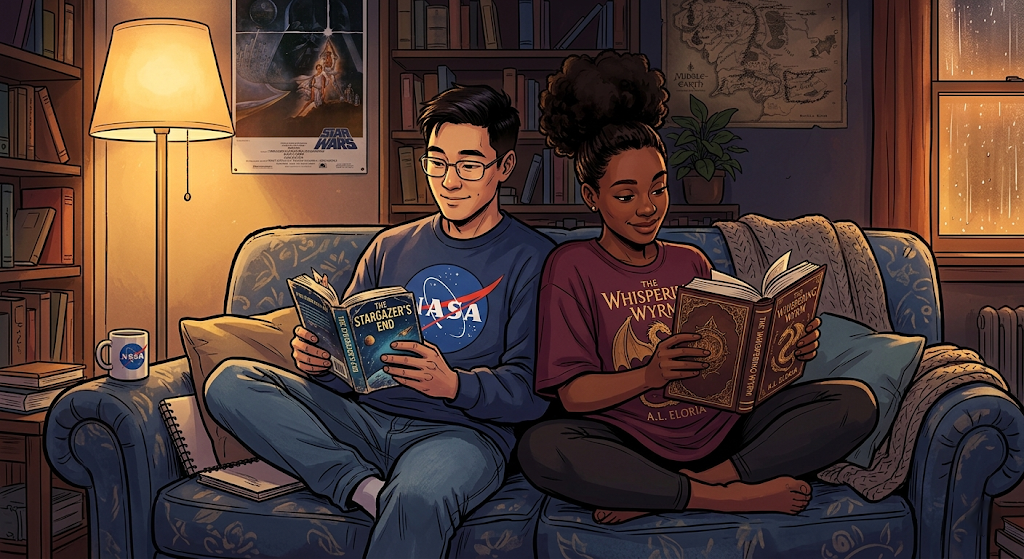
Both, and also neither, and this is exactly the kind of non-answer that turns out to be the most honest one.
If you want a partner who brings intellectual rigor to problems and has made peace with honesty as a core value, the sci-fi fan archetype probably resonates. If you want someone who leads with emotional presence and treats the relationship itself as something worth investing narrative energy in, the fantasy fan archetype maps closer to that. But these are tendencies, not guarantees, and real people are more complicated than any personality system — pop psychology or otherwise — can fully capture.
What the data does confirm, fairly strongly, is that SFF fans as a group make better partners than their reputation suggests. They're less likely to carry unrealistic relationship myths. They're more likely to be genuinely, durably partnered. They're high-openness, which means they're curious, adaptable, and not likely to mock something you care about just because it seems unusual. Dating someone who understands that caring intensely about something — even something fictional — is a feature and not a flaw? That's actually the whole thing.
The sci-fi vs. fantasy debate will never fully resolve, by the way. That's fine. Having a partner you can argue about it with is, genuinely, one of the better relationship outcomes available to us. There is a version of a first date that involves a heated Tolkien vs. Asimov argument and ends with both people wanting to see each other again. It exists. It's worth looking for.
The good news is you already know what kind of person you're looking for. Someone who gets it. The genre is just the trail marker. Follow it.