Long-Distance Gaming Couples: How They Make It Work
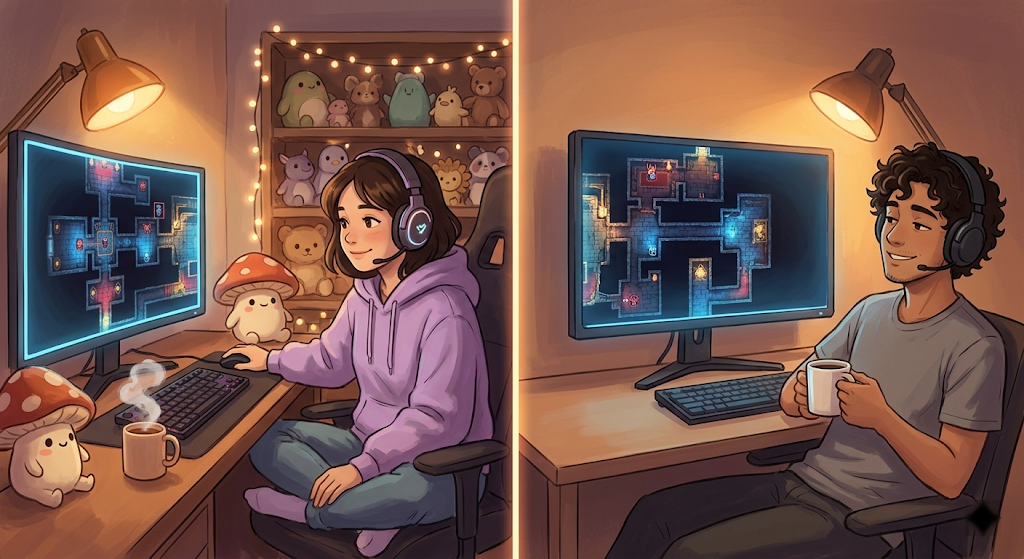
Long-distance relationships are hard. Long-distance gaming relationships? Surprisingly survivable — and there's data to back it up. Here's what gaming couples actually do differently.
The Distance Is Real. The Connection Doesn't Have to Be.
There are 14 million Americans in long-distance relationships right now. Most of them are white-knuckling it through video calls that feel like depositions and text threads that slowly die at both ends. The average LDR doesn't survive 4.5 months. And yet, somewhere out there, a gaming couple is running a Stardew Valley farm together on a Tuesday night, bickering about whether to expand the barn or upgrade the house first, and they are completely fine.
This isn't luck. It isn't that gaming couples love each other more or suffer the distance less. It's that they accidentally built the infrastructure for remote connection long before they needed it. The rest of the LDR world is scrambling to find "shared activities" while gaming couples already have a calendar, a shared world, and a voice channel. They didn't plan for this — they just happened to be in a hobby that runs entirely over the internet by design.
If you're in a long-distance gaming relationship — or trying to figure out if one could work — here's what's actually happening under the hood.
Why Gamers Are Actually Built for This
The standard LDR advice — communicate more, visit when you can, set long-term goals — is fine. It's also the relationship equivalent of "have you tried turning it off and back on again." It's technically correct and practically useless on a Wednesday when you miss someone and there's nothing to do about it.
Gamers have something different. They have a medium built for this exact situation.
Shared Worlds That Actually Exist
Most couples separated by distance are stuck performing closeness: watching the same movie "together" on a video call, narrating their day into a phone. It works. It also feels, after a while, like watching someone else live their life from a great distance — because that's what it is.
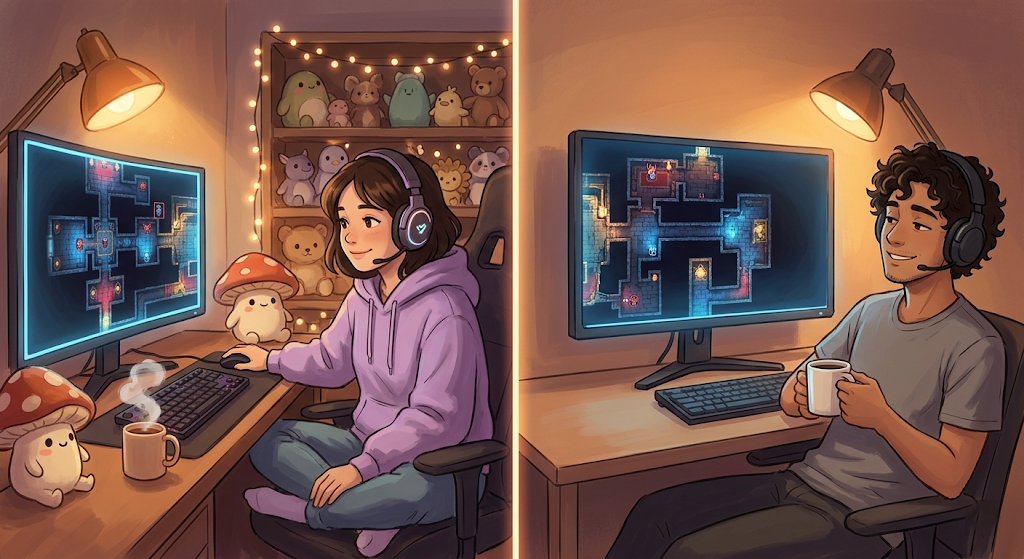
Gaming couples live inside the same space. Not metaphorically — literally. You're in the same game world, running the same dungeon, building the same base. When couples who game together visit Animal Crossing islands they've been maintaining for months, or log into an MMO and see all the gear they've accumulated as a duo, that's not a simulation of shared experience. That is shared experience. The world was made together. It's real.
Voice Comms as Ambient Presence
Discord changed something that most non-gamers don't fully understand: the always-on voice channel. Gaming couples figured this out years ago. You don't need to be talking — you just need to be there. One person farms resources in Minecraft while the other half-watches a YouTube video, both in the same voice channel, occasionally saying something worth saying. That's not "gaming." That's cohabitation. It's what people who live together do every night, except the couch is a Discord server.
The proximity created by shared voice isn't a trick. It's the real thing, reskinned for digital space.
The Science Caught Up to What Gamers Already Knew
Research has a way of catching up to things people have been doing instinctively for years and announcing it like a discovery. The gaming-relationship data is no exception — but it's worth knowing, because the numbers are striking.
Double the Satisfaction
A 2026 Logitech G study surveying more than 1,500 adults found that couples who game together at least once a week reported double the net relationship satisfaction score of couples who rarely or never game together — +47.3 versus +24.0. The weekly gaming couples also averaged 17 hours of quality time per week, nearly four more hours than casual gaming couples. That's not a rounding error. That's a date night every single week on top of everything else, built directly into the hobby.
52% of those couples said gaming gave them a shared goal and teamwork framework. 47% said it helped them decompress together after a stressful day. If you're trying to explain to a skeptical family member why your LDR "actually works," those numbers are a good starting point.
What University Researchers Found in the Field
In 2025, researchers at the University of Washington published a study specifically on long-distance couples who game together regularly. What they found goes deeper than satisfaction scores: LDR gaming couples appropriate game mechanics to express affection. In-game gestures. Gifting items. Positioning their characters close together on screen. Standing next to each other during a boss fight when they don't need to. This is couples expressing things that are hard to say in words, through the language of the game they're both fluent in.
The researchers also found that couples who understood each other's play styles — competitive versus cooperative, hardcore versus casual — had noticeably better communication. Not just in-game. In general. Because play style is just personality at a shorter distance.
It Even Holds for the Long Haul
A BYU study found that when both spouses game together, 76% said it had a positive effect on their marriage. Not their dating relationship. Their marriage. This isn't a honeymoon effect — it's a pattern that persists. And interacting with each other's avatars specifically correlated with higher marital satisfaction. Whatever is happening when you watch your partner's character do something ridiculous in a game and laugh about it together, it matters more than it looks like it does.
The Actual Challenges (Because Pretending They Don't Exist Is Its Own Problem)
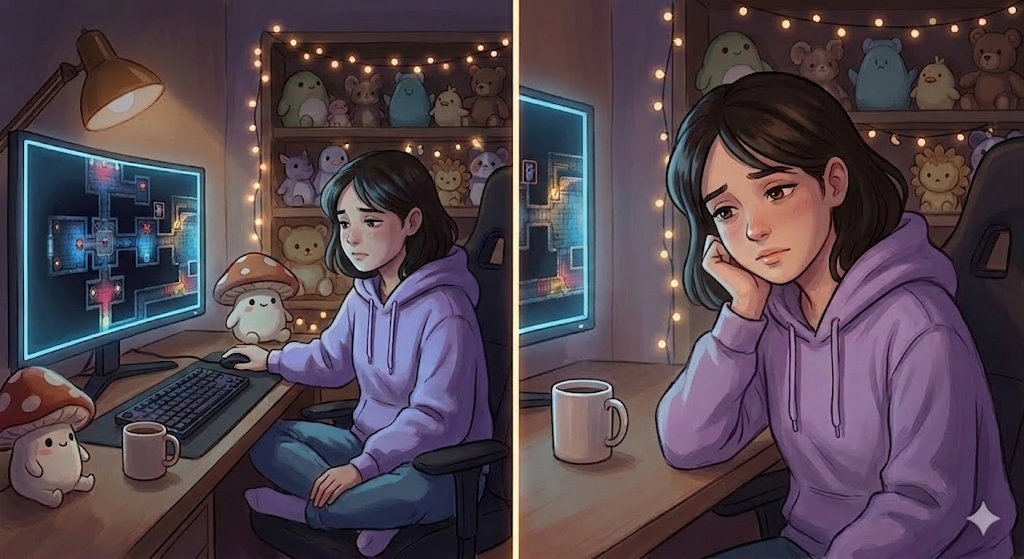
Gaming is a relationship superpower for LDR couples. It is not a solution to every problem. Let's be accurate about what it can and can't do.
Time Zone Friction Is Real
A three-hour time zone gap sounds manageable until you're the one staying up until 1 AM every night because that's the only window that works. It compounds. The fix isn't to grind through it indefinitely — it's to be strategic. Async-friendly games help. Animal Crossing lets you leave gifts and notes on an island that your partner will find when they log in. Minecraft servers hold everything you built together, available whenever either of you shows up. Not every session needs to be live.
Play Style Conflicts Deserve a Real Conversation
The UW researchers specifically flagged this: couples who have mismatched play styles and don't talk about it end up in friction that bleeds into the relationship. If one of you wants to min-max every build and the other wants to explore and take screenshots of sunsets, that's not incompatibility — it's two valid modes that need to be named and negotiated. Pick one game where you match, pick one where you compromise, and don't let every session feel like a referendum on whether you're compatible as people.
Gaming Can Become a Substitute Rather Than a Supplement
There's a version of the LDR gaming routine where you log on, run your session, and log off — and you've technically "spent time together" but didn't actually check in with each other as humans. Games are excellent at creating shared experience. They're bad at surfacing the things you've been quietly worried about for two weeks. Build in time that isn't the game. Not every night, but some nights.
The Practical Toolkit — Games, Rituals, and How to Actually Use Them
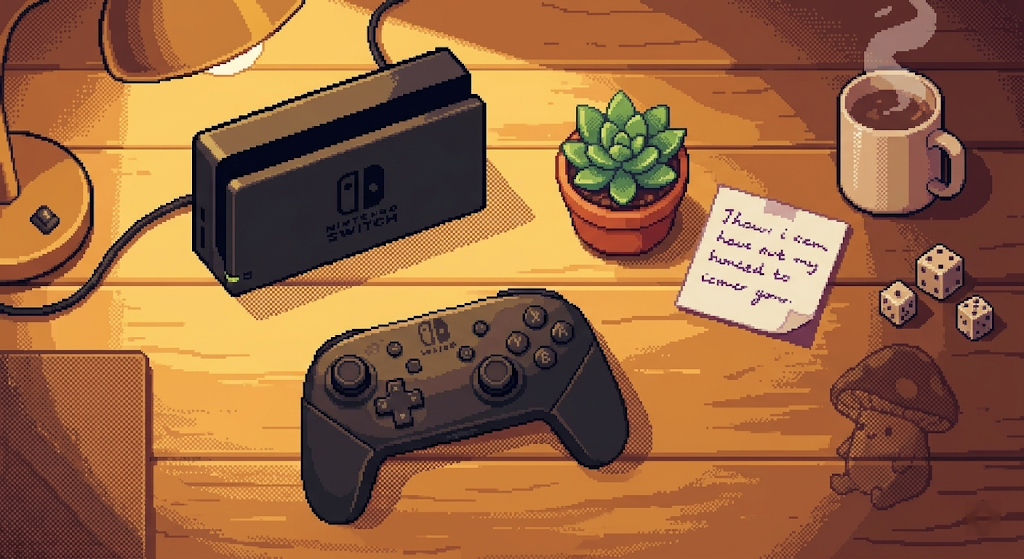
The UW researchers noted that LDR gaming couples build rituals to substitute for the daily habits that co-located couples take for granted. Logging on at the same time every night. A specific game that's "yours." In-game anniversaries. These aren't corny — they're functional. Shared rituals are how couples maintain identity as a unit when proximity isn't doing the work automatically.
Games That Pull Their Weight for LDR Couples
For co-op sessions with full presence: It Takes Two (literally designed to require two players, mechanically forces collaboration), Portal 2 (communication or death, that's the game), Stardew Valley multiplayer (long sessions, shared economy, the barn debate is coming for you).
For shared MMO worlds: Final Fantasy XIV has built-in couples content and housing. No Man's Sky lets you build bases on the same planets across sessions. These are worlds you can inhabit together that remember you were there.
For async play: Animal Crossing is the USPS of gaming relationships — leave gifts, write letters, tend to each other's islands. Minecraft servers persist indefinitely. Leave a structure with a sign. That's digital memorabilia, and it's more meaningful than it sounds.
For competitive energy that bonds anyway: Duo queue in Valorant or Rocket League. Losing together while on comms is surprisingly intimate. So is winning.
The Ritual Layer
Pick a regular slot. Not "whenever we're both free" — an actual recurring time. Tuesday nights, Sunday afternoons, whatever fits. Treat it like a standing date, because it is one. The Logitech G study found gaming couples average 17 hours of quality time per week — that number doesn't happen by accident. It happens because they scheduled it.
Log in a few minutes early. Say hi before the game loads. It sounds obvious. It's the thing people stop doing when a relationship starts to coast.
If you're in the discovery phase — trying to find someone who already lives inside this same world — Dork Date's Guilds are built around exactly this: shared-interest communities where you can meet people organically before a single forced conversation about compatibility.
What the Miles Actually Mean

67% of gamers have formed meaningful relationships through gaming. 8% have met a spouse or long-term partner inside a game. More than 20% of those gaming-spawned connections lasted at least five years. These aren't people who were doing something weird — they were doing what their hobby naturally facilitates: spending real time with real people, building shared history, learning how someone operates under pressure and boredom and victory and loss.
The average long-distance relationship ends in 4.5 months. The ones with strong communication rituals, shared activities, and a genuine sense of inhabiting the same world together — those are the ones that make it past the first checkpoint.
Gaming didn't invent long-distance relationships. But for the people who already live inside this medium, it made the distance smaller. Not erased, not fixed — smaller. That's not nothing. That's actually the whole thing.
The miles are real. So is what you're building on the other side of the screen.