Rolling for Romance: What Your D&D Character Class Says About Your Dating Style
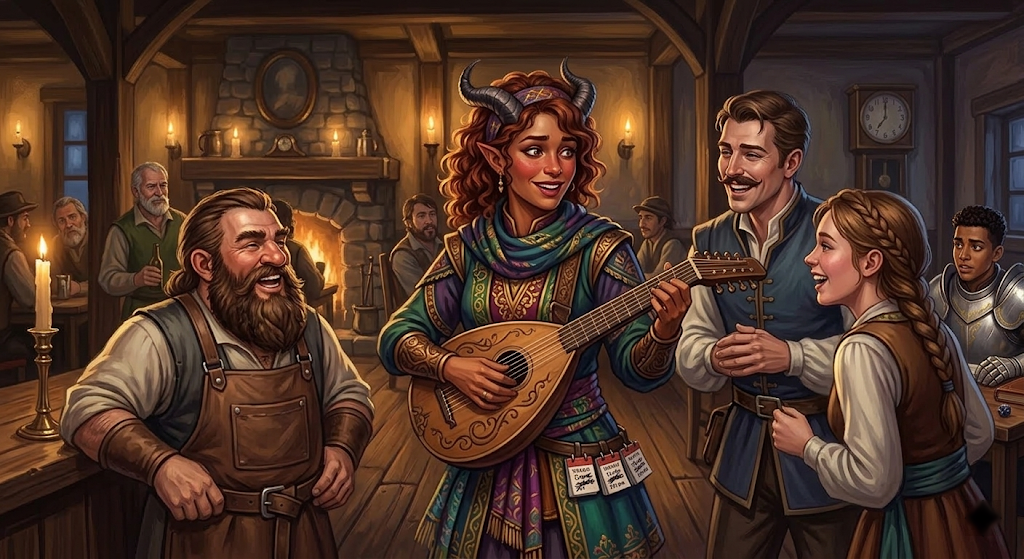
Whether you're a Paladin who commits too hard too fast or a Rogue who ghosts after the third date, your D&D class might be the most accurate personality test you've never taken.
Nobody picks their D&D class randomly. You tell yourself it's a strategic choice — the party needed a healer, you wanted skill versatility, multiclassing was interesting on paper — but somewhere in the back of your brain, you recognized something. That class spoke to you. And if it speaks to you at a table, it's probably speaking to something real about how you move through the world. Including how you date.
Your Class Picked You for a Reason
Over 50 million people have played D&D as of 2022. That's not counting everyone who's watched Critical Role, has a half-built character in their notes app, or plays adjacent TTRPGs and calls it "basically the same." The player base is broader than most people realize — millennials and Gen Z make up the overwhelming majority, female participation has grown significantly over the past decade, and community surveys consistently find that D&D attracts a higher proportion of introverted players than most social hobbies.
That last part is important. Because character creation isn't just a mechanical exercise. When you pick a class, you're choosing how your person engages with the world: how they handle conflict, where they find meaning, whether they lead with their heart or their head or their spell slot. That's not nothing. A 2022 Match Group study found that 49% of singles have fallen in love with someone they weren't initially attracted to — which means shared interests and how you show up at the table matter more than most people admit. Which means the table is already a compatibility filter. And your class is data.
So. What did you roll?
The All-In Types: Paladin, Cleric, and Warlock
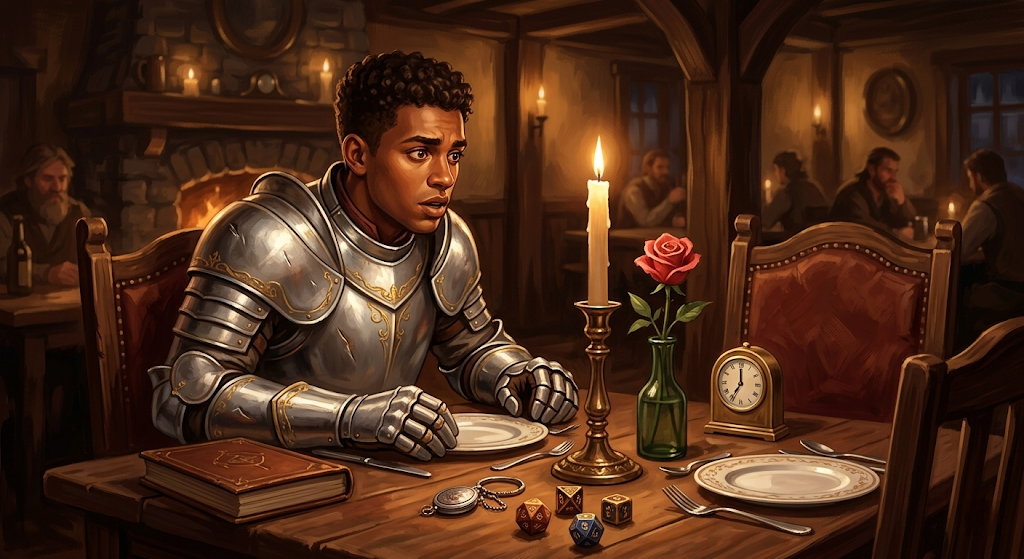
These three classes share a core trait: they commit. Fully, sometimes immediately, occasionally before it's warranted.
The Paladin
You've been on two dates and you would already take a crossbow bolt for this person. That's not hyperbole — that's the Paladin dating style. Devoted to a fault, loyal beyond reason, emotionally available from the jump. The upside: partners feel genuinely seen and valued. The downside: "we've been talking for a week and I cleared my whole calendar for you" is a lot of pressure for someone who's still deciding if they like your vibe.
Paladins aren't needy — they just operate on a different timeline than most people. Their Oath isn't figurative. The growth edge is learning that you don't have to pledge fealty before the first long conversation. Dial it back just enough to give the other person room to want it too.
The Cleric
The natural caretaker of the dating pool. Clerics listen like it's a superpower, remember the small things you mentioned once in passing, and will absolutely show up with soup if you're sick without being asked. The problem is that all that devotion tends to flow outward — Clerics forget that they're also allowed to have needs. If you're a Cleric, your growth edge isn't learning how to care more. It's learning how to ask for what you actually want.
The Warlock
Intense, a little mysterious, not exactly forthcoming upfront — but once they're in, they're in. The Warlock has a past (every Warlock has a past), and they take their time before handing you the keys. But if you earn that trust, the depth you'll find is real. The tension: that same intensity that makes Warlocks compelling can come with a weight that requires a patient, emotionally sturdy partner to hold. The Warlock's superpower is devotion. The baggage is that it doesn't come light.
The Ghosts and the Wanderers: Rogue and Ranger
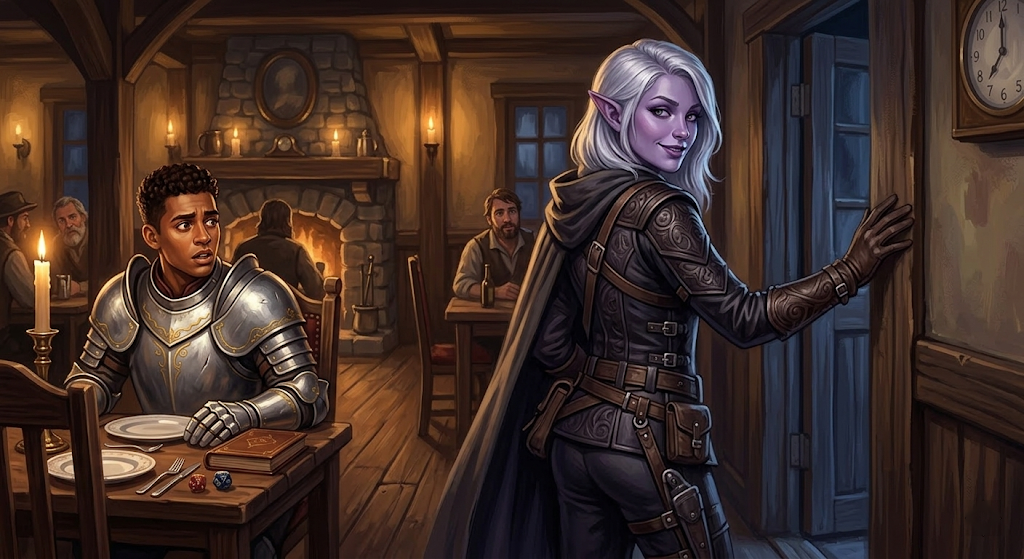
Independence is a feature, not a bug. Until it becomes a coping mechanism.
The Rogue
Rogues are, genuinely, some of the most charming people in the room. They know exactly what to say, they read the vibe instantly, and the first few dates feel like you've known them for years. Then something shifts — not dramatically, not with a fight — they just... stop responding as fast. Go a little quiet. You check the last message and realize it's been five days and they've opened it twice.
Classic Rogue behavior. They're not cruel — they're avoidant. Vulnerability feels like a trap, and getting close to someone feels like handing them a weapon. The Rogue's superpower is perception: they notice everything, which means when they do invest, they're investing in you, specifically. The growth edge is recognizing that disappearing isn't self-protection. It's just leaving someone in the dark.
The Ranger
Self-sufficient. Low maintenance. Genuinely excellent in one-on-one connection — conversations go deep, they actually listen, they don't perform interest they don't have. The Ranger is the person you can go six weeks without seeing and pick up exactly where you left off. That's charming in a friendship. In a romantic context, it requires a partner who understands that needing space isn't the same as not caring.
Where Rangers struggle: group social situations, anything that requires showing up consistently in a crowd, and expressing that they want closeness without it feeling like they're giving up something. The ideal match is someone secure enough to not read absence as rejection. The growth edge is learning that consistent presence, even when it's uncomfortable, is how people build trust.
The Charismatic Disasters: Bard, Barbarian, and Sorcerer
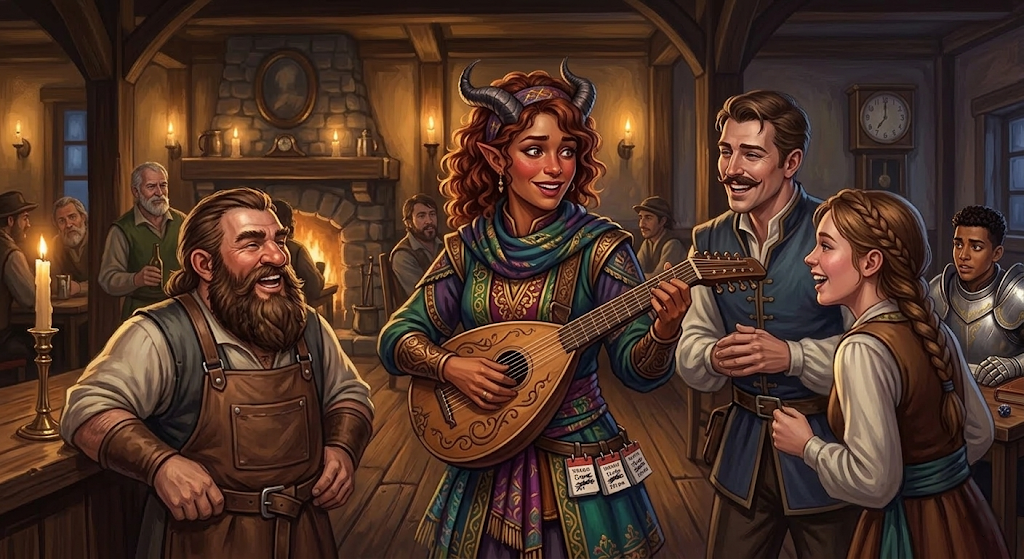
These three run hot. They're magnetic, immediately interesting, and leave a trail of engaged people wondering exactly where they stand.
The Bard
The Bard is the person who could date basically anyone in the room and probably has options with half of them. Flirting is a native language. Attention is plentiful. Choosing, though — committing to one person when every connection feels interesting — that's where Bards get tangled up. "I just have a lot of love to give" is the most Bard sentence ever said, and it's half true and half an explanation for why they're still on every dating app simultaneously.
The Bard's superpower is genuine, effortless connection. The growth edge is depth over volume. When a Bard finally commits, they're extraordinary partners. The question is getting there.
That's what Guilds were made for — find your thing, talk to everyone, and let the shortlist write itself.
The Barbarian and Sorcerer
Two different flavors of "a lot happening at once." Barbarians feel everything at full volume: they text at 2am, they fight with the same intensity they love with, they're the person who has never sent a message they regretted because regret requires reflection and Barbarians are in motion. They're real, they're present, they're exhausting in the best possible way. Their match needs to be someone who can handle emotional weather without getting knocked over.
Sorcerers bring chaos that they didn't entirely choose. Things just happen around them. Relationships are exciting — unpredictable in a way that feels alive rather than unstable, at least at first. The growth edge for both: learning that intensity is a dial, and you're allowed to turn it down without losing yourself.
The Thinkers: Wizard, Monk, Druid, and Fighter

These classes lead with their heads, their discipline, or their roots. They're the slow-burn archetypes — the ones who are harder to read at first but run deep once you get there.
The Wizard
The Wizard has researched your LinkedIn before the first date. Not in a creepy way — in an "I want to understand context" way. There is a difference, in the Wizard's mind, even if the outcome looks the same from the outside. The overthinking is genuine: every text gets analyzed, every pause in conversation is a variable to consider, and 3am "what did they mean by that" sessions are a regular feature of the Wizard dating experience.
The superpower: Wizards are deeply thoughtful partners who don't say things they don't mean. When a Wizard tells you something matters to them, it's considered and real. The growth edge is learning that not every interaction requires a post-mortem. Sometimes "ok" just means okay.
The Monk
Slow, intentional, and watching more than they're talking. The Monk is the one who remembers what you said three weeks ago in passing — not because they wrote it down, but because they were actually listening. They're emotionally intelligent and deliberate, which means they're not going to declare interest before they mean it, and they're not going to rush anything.
The challenge: from the outside, Monk energy can read as distant or hard to reach. The growth edge is letting some of that internal processing happen in front of another person instead of arriving with conclusions already formed.
The Druid and Fighter
A quick word on the two most underrated dating archetypes:
Druids are patient, adaptable, and take their time warming up — but when they open up, it's the real thing. They don't chase; they make space and let things grow. Fighters are the quietly reliable partner who just shows up, every time, without fanfare. Not flashy, not complicated, not likely to disappear. If you want someone consistent in a world full of Rogues and Bards, a Fighter is the sleeper pick. Neither class gets enough credit.
A Pairing Guide Nobody Asked For (But Here We Are)
The research brief had a section titled "what to look for in a partner by class." You're welcome.
Paladin needs someone with a settled sense of self — not because the Paladin is overwhelming, but because their intensity is real and a secure partner won't read it as pressure. Warlocks and Monks tend to hold Paladin energy well.
Rogue needs someone who doesn't chase but also doesn't disappear. A Ranger can match the independence, but the real growth partner for a Rogue is a Fighter — someone consistent enough that the Rogue learns that showing up doesn't mean getting trapped.
Wizard needs a partner who can interrupt the analysis spiral with presence, not data. Druids are a natural fit — patient enough to wait out the processing, grounded enough not to spiral with them.
Bard needs someone interesting enough to hold their attention and secure enough not to need constant reassurance. Sorcerers match the energy; Monks provide the stability a Bard often secretly wants but would never admit.
Cleric needs a partner who actively reciprocates the care, not just receives it. Fighters and Paladins tend to do this well — they show up in kind, which is all a Cleric ever really needed.
Barbarian needs someone emotionally durable — not a pushover, but someone who can hold their ground when the intensity spikes and re-engage after. Another Barbarian can work, but it's a lot of weather. A Monk provides the grounding Barbarians benefit from most.
None of this is a rule. It's a starting point. The actual work is knowing which of these patterns you default to — and which ones you fall into when things get hard.
Whoever you rolled: every class has a dating superpower and a growth edge. The Rogue's perceptiveness is extraordinary. The Paladin's devotion is rare. The Wizard's thoughtfulness is the kind of attention most people never get from a partner. The issue isn't the class. It's whether you're leaning into the superpower or hiding behind the defense mechanism.
So: what's your class? And more importantly — are you playing it to its strengths?