Co-op to Couple: How to Tell When a Gaming Friendship Is Turning Into Something More
You noticed they were online before the notification even loaded. Not because you were watching — you weren't watching — but because you'd been half-thinking about logging on for the last twenty minutes, the way you think about getting water when you're not quite thirsty yet. You opened the app. Their name was already there. Green dot. And something in your chest did a thing you didn't ask it to do.
That's the whole article, really. But if you're here, you've been in this situation for longer than a moment — probably for months, probably with a specific person, probably someone you've been queuing with long enough that their schedule feels like yours. What you need right now isn't permission to have feelings. You have those. What you need is a framework for figuring out whether the other person is in the same place.
Here's how to read the signs.
The Signs
Nerds don't miss signals because they're oblivious. They miss them because they're systematic — they wait for one clear, unambiguous data point when what they're actually accumulating is a slow pile of smaller ones. These are those smaller ones.
1. The Login Watch
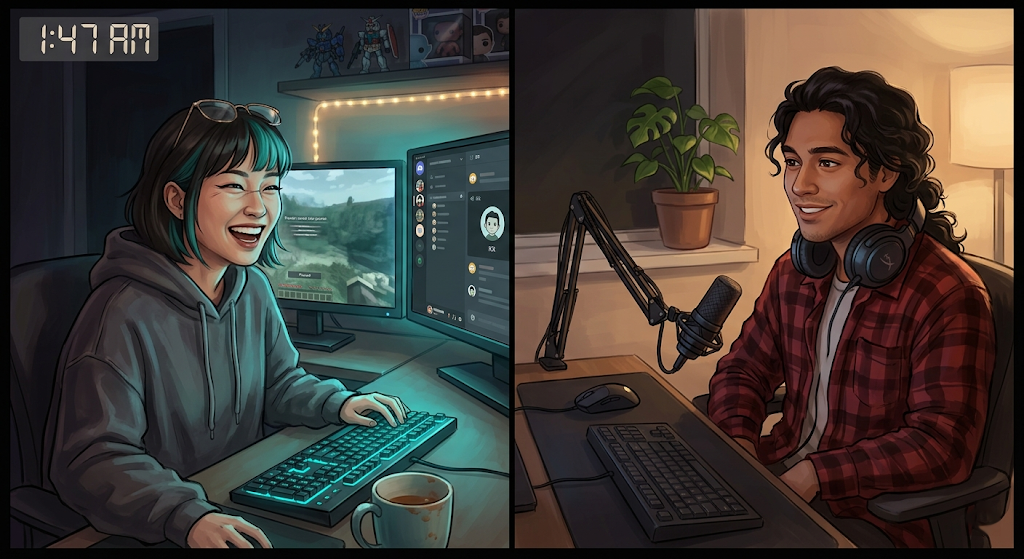
They appear in your lobby within seconds of you coming online. Every time. Not occasionally, not when they happen to already be on — within minutes, consistently, like they've had a browser tab refreshing in the background. This is not coincidence. This is someone who has internalized your login schedule the way you internalize a commute. You've become, without either of you naming it, each other's first notification.
2. The "I'll Wait for You" Move
A better group invites them. A guild run is going — good XP, players they like, genuinely more efficient. They decline. You find out later, because they don't announce it; announcing it would be too obvious. But the pattern is visible if you're watching: they have repeatedly, quietly, chosen the slower queue over the better run because the slower queue has you in it.
3. Protective Instincts In-Game
There's a difference between strategic backup and instinctive cover. Strategic means they're protecting the objective. Instinctive means they've already pivoted toward you before the call was made — and they do it every time, not just when it's the smart play. If someone consistently puts themselves between you and damage they didn't have to eat, their brain has already made a decision about you that their mouth hasn't caught up to yet.
4. Session Creep
You scheduled two hours. The raid ended on time. It is now 1:47am and the game is still technically running — paused, orbiting the base camp menu, sitting on a loading screen neither of you has clicked through — because neither of you has said goodnight. This stopped being a gaming session a while ago. You both know it. Nobody is ending the call.
5. The Personalized Loot Drop
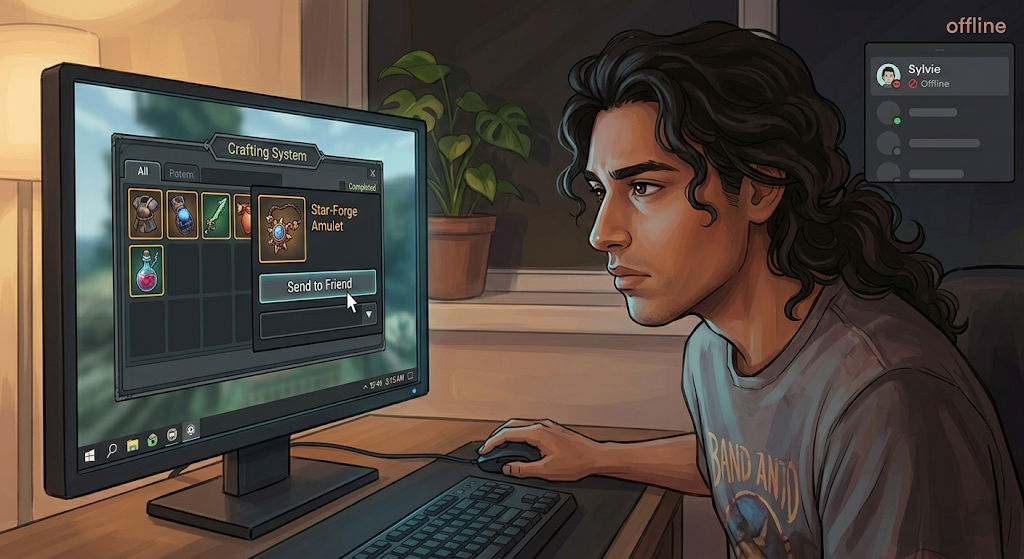
They crafted something for your build. Didn't ask if you wanted it. Didn't make a production of it. Just showed up with exactly the item that fills the gap in your loadout — the one you mentioned offhandedly two sessions ago, the one you'd been working around. This required them to remember what you said, decide to do something about it, and spend time and resources making it happen. For your build. Specifically. That's not being a good teammate. That's something else.
6. The Soft Jealousy Tell
You mention you played with another friend last night — someone from a different server, or a real-life friend who finally downloaded the game. They say "cool" or "fun" or "how'd it go." Completely normal response. But there's a half-beat pause before they say it. A small recalibration. If you weren't already watching for it, you'd miss it. The fact that you caught it — and that you're thinking about it now — tells you something about where your head is. The pause tells you something about where theirs is.
7. They Remember Your Stuff, Not Just Game Stuff
At the start of a session, before the queue even pops: "how'd the interview go?" Or "is your dog okay, you mentioned she was sick." Or "did that thing with your landlord get sorted?" They are carrying context about your life that has nothing to do with your character sheet or your class build. At some point, you became someone whose life they track. Not because they're keeping notes — because they were paying attention when you weren't expecting it.
8. Non-Gaming Contact Creep
The first meme was just a meme. The second was "this reminded me of you." By the tenth, you're not coordinating sessions anymore — you're just talking. Random hours, random topics, no agenda. The contact has stopped being logistical and started being what it actually is: wanting to share things with a specific person because they're the person you want to share things with.
9. Voice Call Lingering
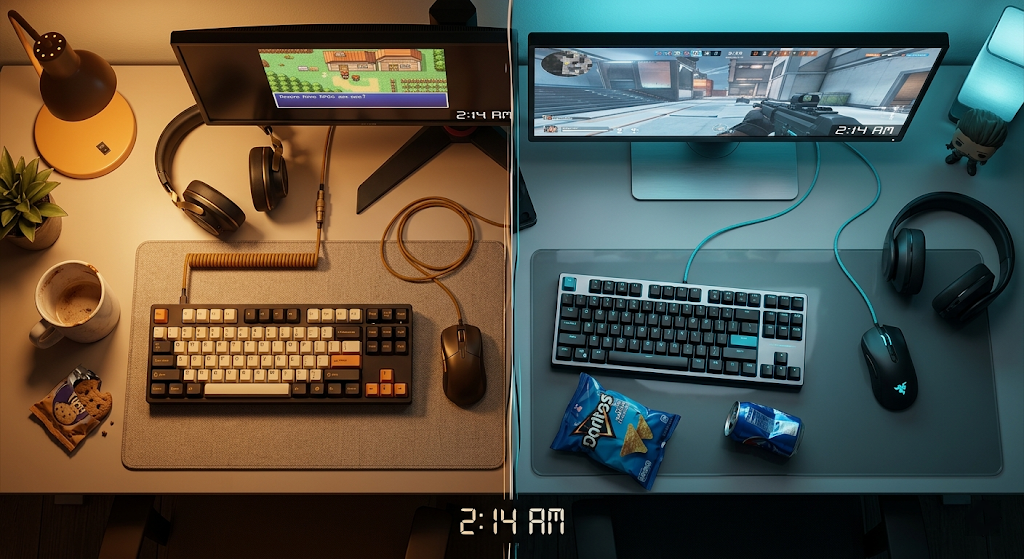
The session ends. The party disbands. The game closes or goes idle. Neither of you leaves the call. And then it's 2am and you're talking about something that has nothing to do with anything, and there's comfortable silence between topics where nobody reaches to fill it. That silence is data. Comfortable silence with someone you don't know well is a social skill. Comfortable silence with someone you're falling for is something else entirely — and if you've been sitting in it for the last forty minutes without noticing, you already know that.
10. They Choose You Over Better Options, Repeatedly
Once is nothing. Three times is a lean. Seven times across four months is a pattern, and patterns don't lie the way individual moments can. If they have consistently, without announcement or credit, chosen the slower queue and the less efficient group and the later night — and the only constant across all of it is you — that's not circumstance. That's preference. Preference expressed through a dozen small decisions nobody made a speech about is about as legible as communication gets.
Why Nerds Miss This

Gaming friendships have a built-in alibi. You're not spending time together — you're playing a game. Not texting constantly — you're coordinating sessions. Not lingering at 2am because you can't say goodnight — you're finishing the debrief. Every behavior that reads as obviously romantic has a serviceable alternative explanation. Nerds will grab that explanation like a lifeline — and that's not actually how the evidence works.
Relationships don't announce themselves. They accumulate. One sign is a data point. Three signs in the same direction is a pattern. Ten signs across fourteen months of nightly sessions is a finding. The mistake is waiting for a single undeniable moment of certainty — because that's how it works in media, and almost never how it works in life. You look back later and think: it had been obvious for a long time.
Here's the counterintuitive part: the ambiguity isn't a problem — it's the architecture of the most durable relationships. A 2022 meta-analysis by Stinson, Cameron, and Hoplock — 1,897 participants across 18 studies — found that roughly two-thirds of couples started as friends first, and nearly half report the friends-first pathway as their preferred way to meet a partner. Critically, "the vast majority did not enter the friendship with romantic intentions." What feels like ambiguous limbo is, statistically, the most common starting point for an actual relationship.
There's also the basic physics of repeated exposure. Zajonc's mere-exposure effect, established in 1968 and extended by Reis and colleagues in 2011, shows that repeated positive contact reliably predicts increased attraction — independent of intent. Hours of low-stakes, mutually enjoyable interaction — that's not background noise. It's months of evidence that you work well together, you make each other laugh, and you keep choosing to come back. The attraction isn't a mystery. It's a predictable outcome.
A 2020 PubNub survey of 500 gamers found that 67% had formed a meaningful relationship through gaming, and 8% had met a spouse in-game. You're not an edge case. You're in the majority.
What to Do About It
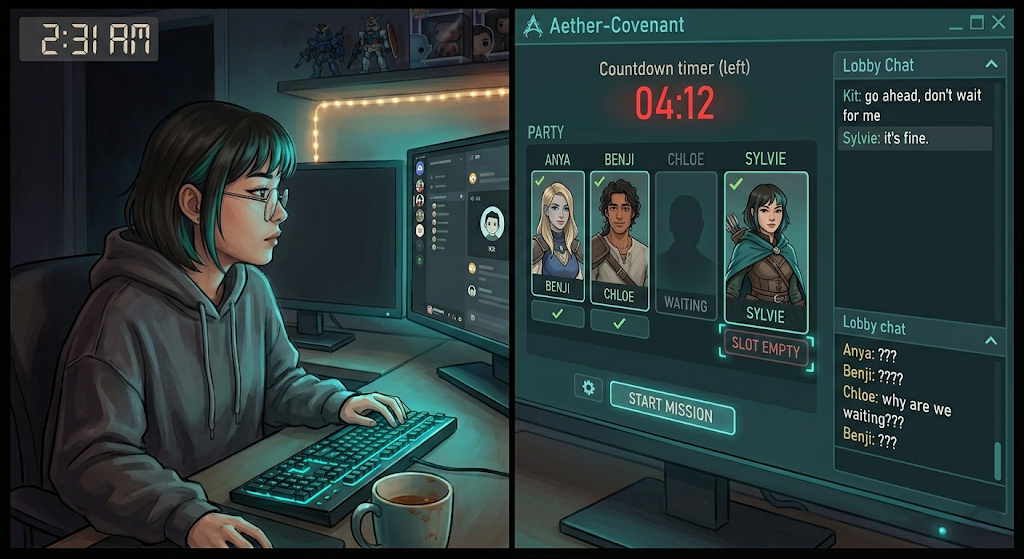
Don't move on the first sign you notice. Don't reconstruct six months of history and assign each moment a probability score. The move is simpler: check the pattern. Three or more signs in the same direction, sustained over time, is meaningful. One late call and a meme is a late call and a meme.
Test the outside-game hang — a show you've both mentioned wanting to see, a game neither of you owns yet, lunch if geography allows. You're not proposing anything; you're extending the context beyond the game to see what survives. Watch if they say yes without hesitation, and whether they make it happen faster than they needed to.
If you want to slow-roll it, try playing something just the two of you — no group, no guild, no party audience to perform for. A co-op title, nobody else in the lobby. Watch what fills the space when there's no raid objective. You'll learn more in two hours than from three months of Discord history.
And at some point, if the signs are all there and you're still here looking for permission — you do have to say something. It doesn't have to be a declaration. "I've been looking forward to our sessions more than I probably should" is a door, not a demolition. It gives them something to walk through, or not. Say a small true thing, out loud. Then see what they do with it.
This is how some of the best relationships start. Not with a grand gesture or a carefully timed speech. Not with someone deciding, in a single dramatic moment, that now is the time. But with months of small choices — the queue they waited on, the item they built at 11pm for a loadout that wasn't theirs, the call that ran to 2am with no destination — accumulating into something neither of them quite named but both of them knew.
The game was never the point. It was just the excuse that gave them enough time together to figure that out.
If you think something's happening, you're probably right. The question isn't whether the signs are there. It's whether you're ready to look at what they're pointing to.
Sources: Stinson, D.A., Cameron, J.J., & Hoplock, L.B. (2022). "The Friends-to-Lovers Pathway to Romance." Social Psychological and Personality Science. PMC8892041. PubNub Survey (2020). "Chatting While Gaming Can Lead to Marriage, Friendships, and Affairs." PR Newswire. Zajonc, R.B. (1968). "Attitudinal Effects of Mere Exposure." Journal of Personality and Social Psychology. Extended by Reis, H.T. et al. (2011). Journal of Personality and Social Psychology.